The Biomechanical Edge: How Motion Capture Tech Recalibrates Efficiency Benchmarks in NFL Routes, NBA Drives, Soccer Pressing, and MLB Swings
Mia Wagner · Jun 21, 2026
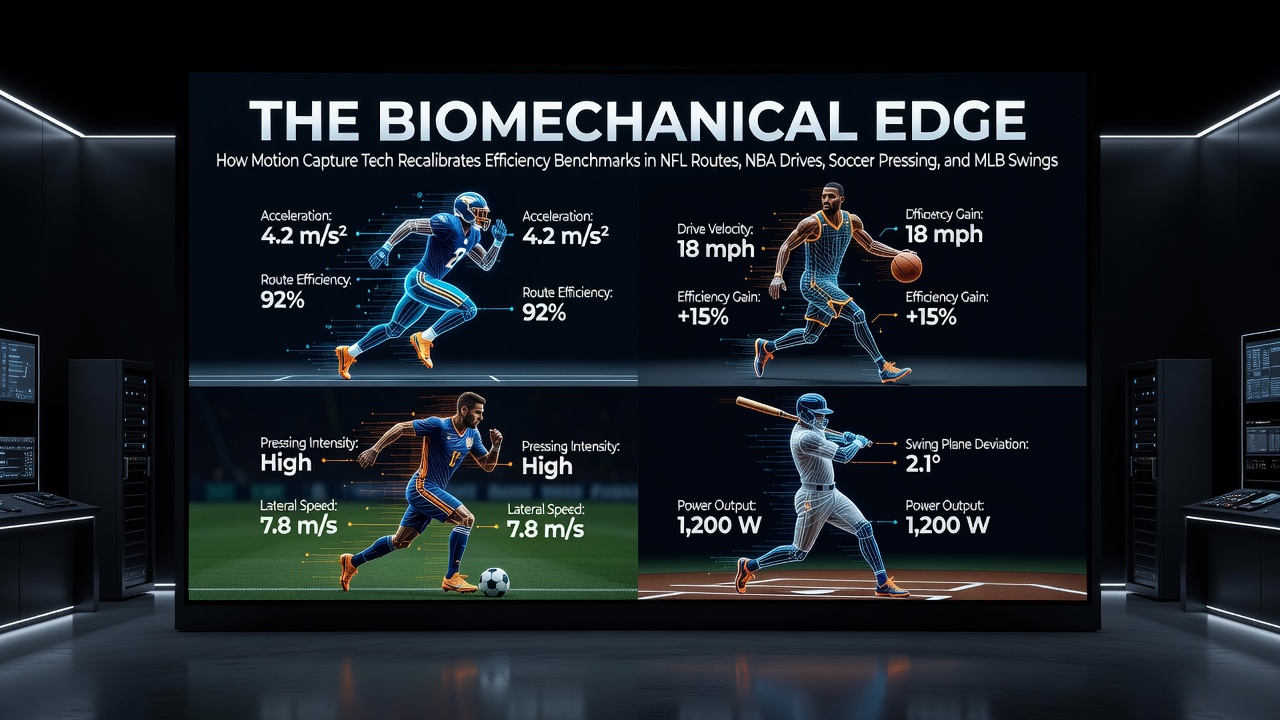
The Biomechanical Edge: How Motion Capture Tech Recalibrates Efficiency Benchmarks in NFL Routes, NBA Drives, Soccer Pressing, and MLB Swings
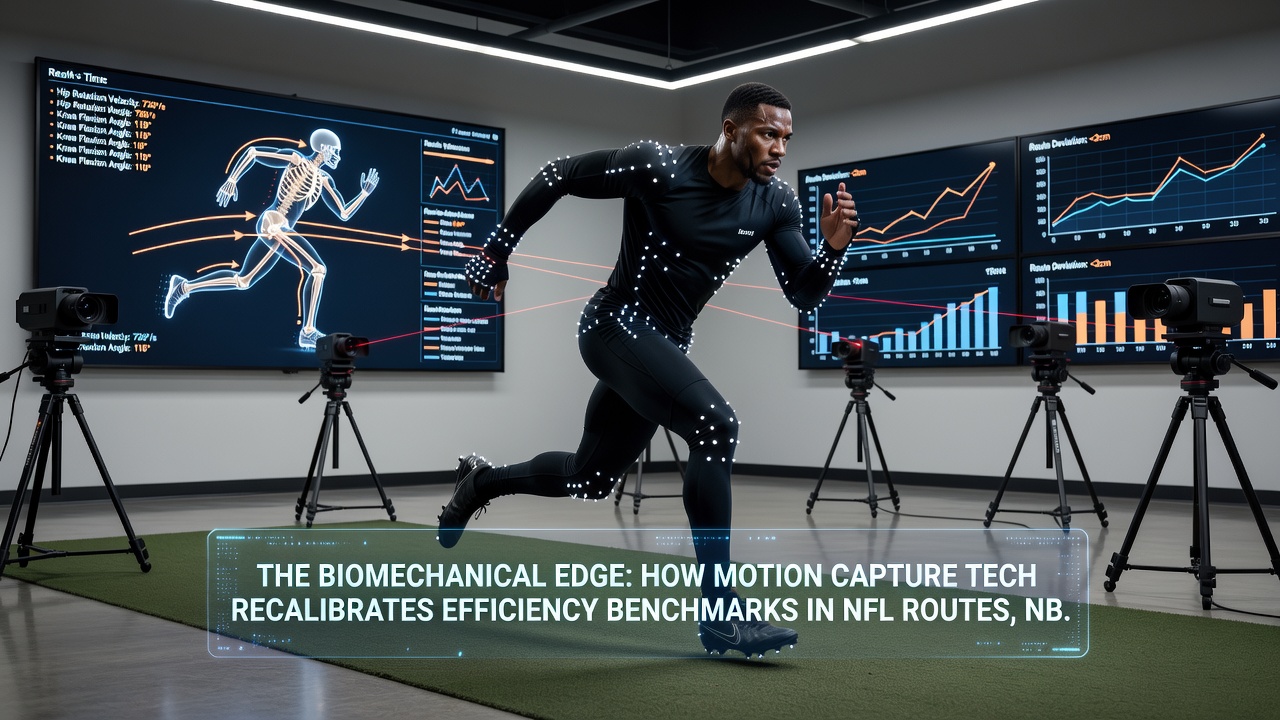
Motion capture technology has shifted how teams measure performance across major leagues since its expanded adoption after 2015, and observers note that the data streams now define new efficiency standards for NFL route running, NBA drives, soccer pressing sequences, and MLB swings. Researchers at institutions like the University of Queensland have documented how optical and inertial systems capture thousands of data points per second, allowing coaches to recalibrate benchmarks based on joint angles, force distribution, and acceleration patterns rather than traditional stopwatch metrics alone.
Precision Mapping in NFL Route Execution
NFL teams deploy motion capture suits during practice to record every step of a receiver's break or a quarterback's dropback, and this data reveals that optimal hip rotation angles often fall between 35 and 42 degrees for sharp cuts at full speed. Analysts compare these figures against historical play logs to adjust route trees, which means a player previously graded on completion percentage now faces evaluation tied to deceleration rates and plant foot placement. Studies from the American College of Sports Medicine show that such recalibrations have narrowed variance in route timing by measurable margins across multiple franchises, while the same systems flag compensatory movements that precede lower-body strain.
Drive Mechanics and NBA Court Efficiency
In the NBA, portable markerless systems track first-step explosiveness and shoulder alignment during drives to the basket, producing datasets that reset what counts as an efficient attacking move. Data collected through 2025 indicates that elite drivers maintain trunk lean under 15 degrees while generating vertical force peaks above 2.8 times body weight, benchmarks that now appear in scouting reports and contract negotiations. Teams integrate these readings with video to refine footwork drills, and the approach has produced shifts in how players allocate energy across a 48-minute game. Observers point to league-wide trends where reduced lateral knee torque correlates with sustained scoring output deeper into seasons.
Pressing Patterns and Soccer Field Dynamics
Soccer clubs apply motion capture during small-sided games and full-pitch sessions to quantify pressing angles, recovery runs, and torso orientation when closing down opponents. European research groups, including those affiliated with the German Sport University Cologne, report that top pressing units sustain hip flexion between 28 and 33 degrees during high-intensity bursts lasting under four seconds, metrics now used to set positional thresholds for midfielders and forwards. The resulting benchmarks influence substitution timing and formation tweaks, because coaches see exactly where acceleration drops below 85 percent of an individual's peak. These adjustments have appeared in match reports across major leagues through the 2025-2026 campaign, and they continue to refine how pressing success gets measured beyond simple tackle counts.
Swing Optimization in MLB Lineups
MLB organizations place reflective markers or use markerless rigs during batting practice to capture bat path, pelvis rotation, and hand speed at contact, then compare outputs against league averages updated each spring. Recent datasets highlight that peak bat speed efficiency often occurs when the lead elbow stays within 10 degrees of a 90-degree flexion throughout the swing plane, a standard that has prompted adjustments in instructional programs. Teams cross-reference these biomechanical markers with Statcast exit velocities, creating hybrid efficiency scores that influence lineup construction and player development plans. Figures from the 2026 season show several clubs achieving tighter distributions in launch-angle consistency after incorporating such feedback loops.
Cross-League Data Integration Trends
Shared platforms now allow comparison of motion profiles between sports, so an NFL defensive back's change-of-direction metrics can inform soccer midfield pressing drills or basketball defensive slides. Industry reports from the International Society of Biomechanics note that standardization of capture protocols since 2018 has enabled these transfers, although sport-specific rules still govern final benchmark application. Training staffs review aggregated files quarterly, which means efficiency targets evolve continuously rather than remaining fixed season to season. The process also surfaces injury-risk correlations, such as excessive lumbar extension during certain MLB swings or NBA layup finishes, prompting load-management protocols that extend careers.
Conclusion
Motion capture continues to refine how efficiency gets defined across these four sports because the technology supplies objective, repeatable measurements that replace subjective scouting impressions. As datasets grow through June 2026 and beyond, teams adjust training regimens and evaluation criteria around joint-level data rather than outcome statistics alone, producing incremental but consistent shifts in performance standards.