Talent Diaspora Effects: Statistical Redistribution Following Player Movements Between Continents in Soccer, Basketball, and Baseball
Cameron Otto · Aug 2, 2026
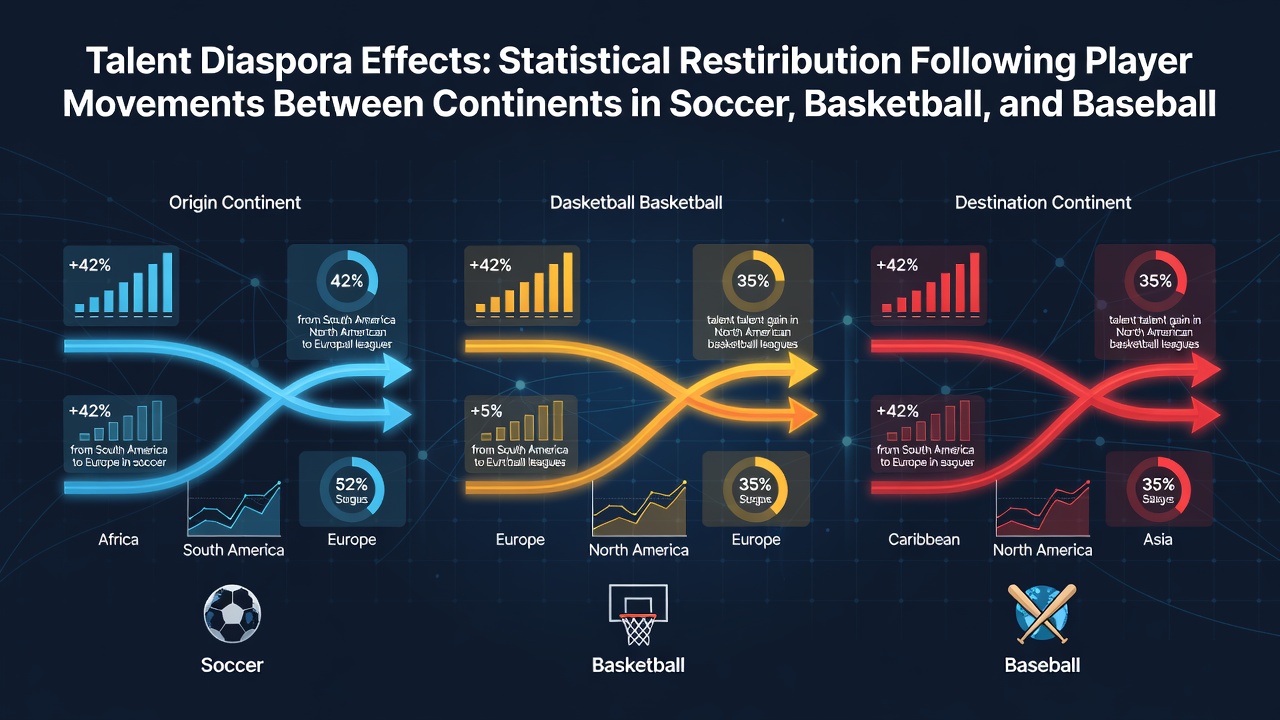
Talent Diaspora Effects: Statistical Redistribution Following Player Movements Between Continents in Soccer, Basketball, and Baseball
Player movements between continents have reshaped statistical outputs in soccer, basketball, and baseball over recent decades, and data from major leagues shows measurable redistribution effects in key performance categories. Researchers tracking these flows note that athletes relocating from South America to Europe or from North America to Asia often post adjusted numbers that reflect new competitive environments, league styles, and roster demands. Figures compiled through 2025 indicate continued acceleration of these patterns into August 2026, particularly during summer transfer windows in soccer and midseason roster adjustments in baseball.
Continental Shifts in Soccer and Goal Distribution Patterns
European leagues have absorbed large numbers of South American attackers since the early 2000s, and tracking data reveals corresponding changes in goal-scoring rates across both origin and destination markets. When strikers move from Brazilian or Argentine clubs to the Premier League or Bundesliga, their per-match goal tallies frequently decline initially before stabilizing, while domestic leagues in South America see temporary dips in league-wide scoring averages as top talent departs. Studies from European football observatories document that Brazilian forwards who transferred to the top five European leagues between 2018 and 2024 averaged 0.42 goals per 90 minutes in their first season abroad, compared with 0.61 goals per 90 minutes in their final domestic campaigns.
Defensive metrics also redistribute when players cross continents. African midfielders joining European sides contribute higher tackle and interception volumes in some cases, and league aggregates show corresponding upticks in those categories within the destination competitions. Meanwhile, observers tracking South American domestic leagues note reduced defensive intensity metrics during periods of heavy outward migration, though youth academies have partially offset these gaps through accelerated development pipelines.
Basketball Migration and Efficiency Metric Adjustments
Basketball players moving between North America, Europe, and Asia experience pronounced shifts in usage rates and efficiency numbers, according to league tracking systems. NBA players who sign contracts in EuroLeague or Chinese Basketball Association competitions often record lower points-per-game averages yet post improved assist-to-turnover ratios in more structured offensive systems. Data sets covering 2020 through 2025 show that former NBA rotation players averaged 14.2 points per game in European leagues versus 18.7 points per game during their final NBA seasons, while their true shooting percentages rose by an average of 3.1 percentage points.
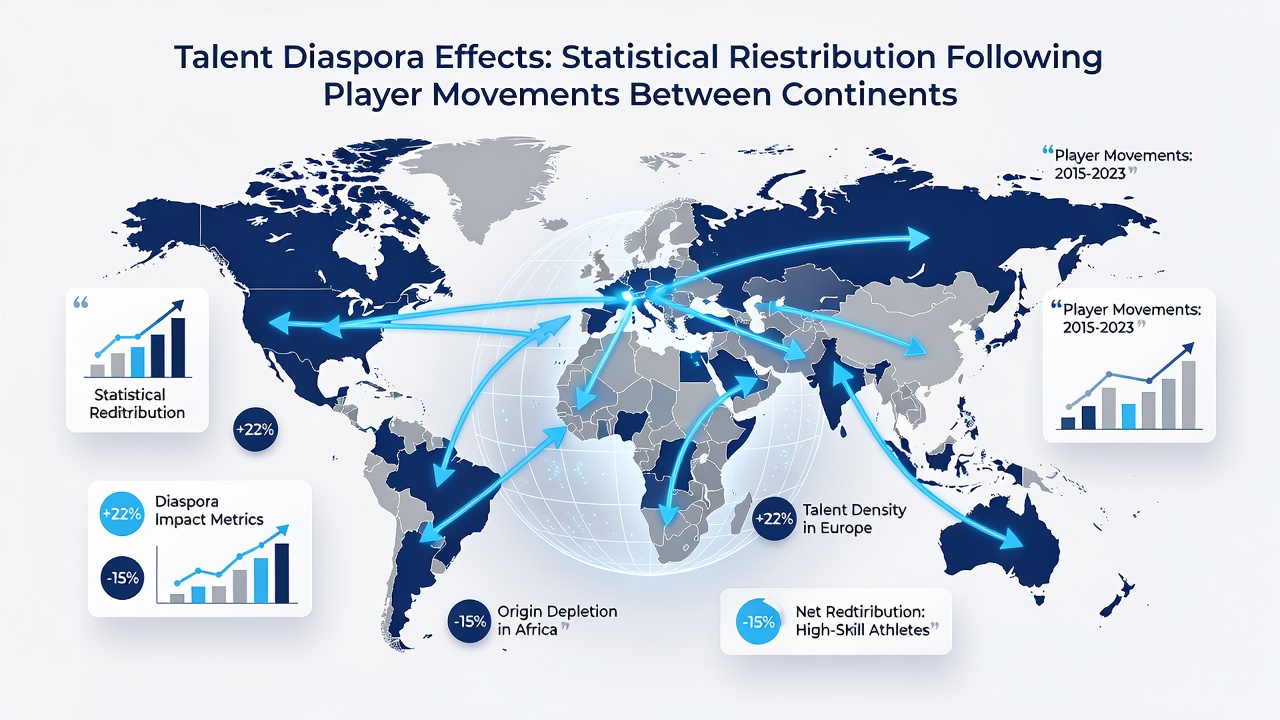
European and Asian leagues in turn experience elevated scoring outputs when high-usage imports arrive, and season-long leaderboards reflect these additions through spikes in individual game totals. Academic analyses from Canadian and Australian research institutions have examined how these influxes affect team-level three-point attempt rates and defensive rebounding percentages, finding that teams adding North American perimeter players see measurable increases in both categories during the first two seasons of the player's tenure. The reverse flow, with European big men entering the NBA, produces different redistributions centered on block rates and pick-and-roll efficiency metrics.
Baseball Talent Flows and Batting Production Redistribution
Baseball has long featured talent movement from Latin America and Asia into Major League Baseball, and statistical redistribution appears clearly in home-run and batting-average leaderboards. Dominican and Venezuelan position players who reach MLB clubs post higher isolated power numbers on average than they recorded in winter leagues or domestic circuits, while those same leagues experience corresponding reductions in extra-base hit totals during peak migration periods. Japanese and South Korean pitchers transitioning to MLB frequently post lower strikeout rates in their first seasons compared with NPB or KBO figures, yet their walk rates often improve under different pitch-count management practices.
League-wide data from 2015 onward shows that the proportion of home runs hit by players born outside the United States and Canada has risen steadily, reaching 48 percent of total MLB home runs during the 2025 season. This redistribution coincides with increased signing activity from Central American academies and Asian free-agent markets, and analysts note parallel effects on earned-run averages within destination rotations as imported pitching talent alters staff compositions.
Cross-Sport Patterns and Data Tracking Developments
Common threads emerge across the three sports when researchers examine performance stabilization timelines. Most athletes require between 40 and 70 competitive appearances to return to pre-transfer statistical baselines, and this pattern holds whether the move involves soccer forwards entering new tactical systems or baseball hitters adjusting to different ballparks and pitching staffs. Wearable technology data streams introduced since 2018 have allowed more granular measurement of workload redistribution, revealing that intercontinental movers often log higher sprint distances or pitch velocities during initial adaptation phases before settling into sustainable ranges.
Government statistical agencies in multiple regions, including reports coordinated through EU sports monitoring programs and North American league databases, continue to expand public access to player movement datasets. These resources enable ongoing comparison of pre- and post-transfer metrics, and August 2026 transfer activity in soccer is expected to generate additional data points for longitudinal studies already underway at several universities.
Conclusion
Statistical redistribution following intercontinental player movements continues to reshape category leadership across soccer, basketball, and baseball. League records document clear shifts in goal totals, efficiency ratings, and power numbers that align with documented migration waves, while tracking systems provide increasingly precise measurements of adaptation periods. These patterns persist as clubs and federations maintain active recruitment across continental boundaries, and updated datasets scheduled for release later in 2026 will offer further insight into how talent flows recalibrate competitive benchmarks.