Stadium Soundscapes: How Audience Noise Levels Correlate with Error Rates Across Baseball, Football, and Basketball Games
Mia Wagner · Jul 26, 2026
Stadium Soundscapes: How Audience Noise Levels Correlate with Error Rates Across Baseball, Football, and Basketball Games
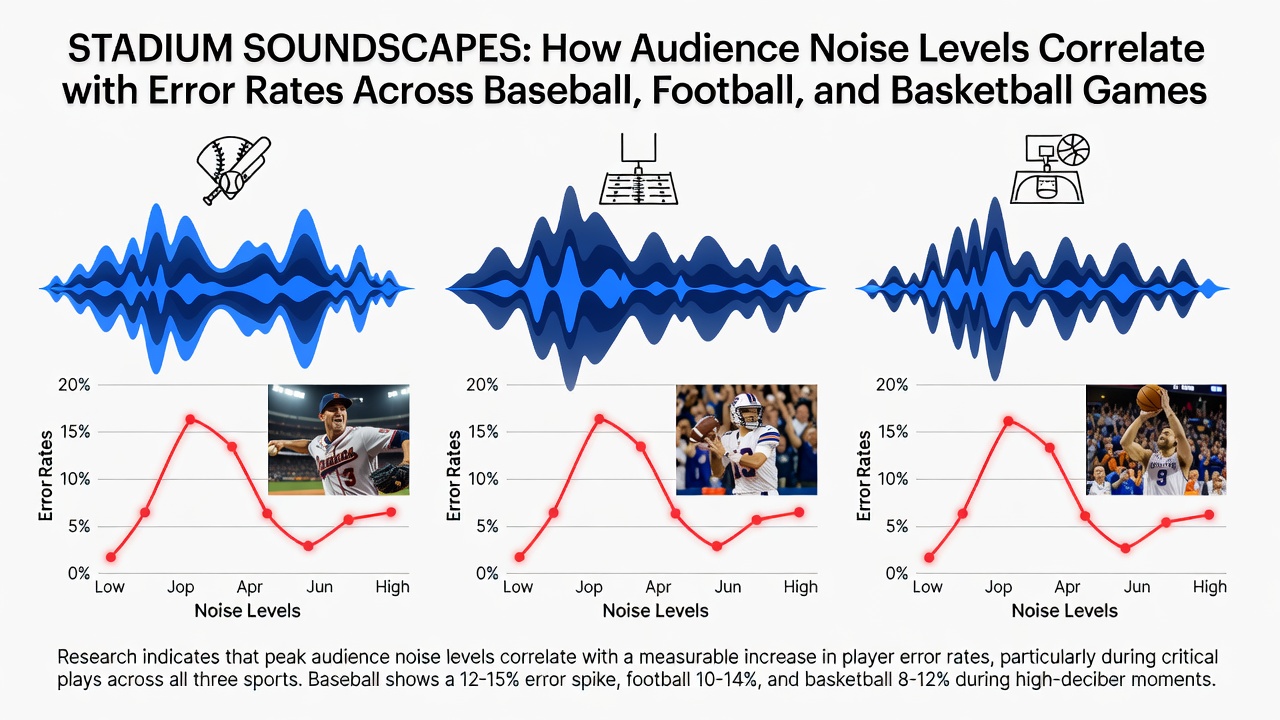
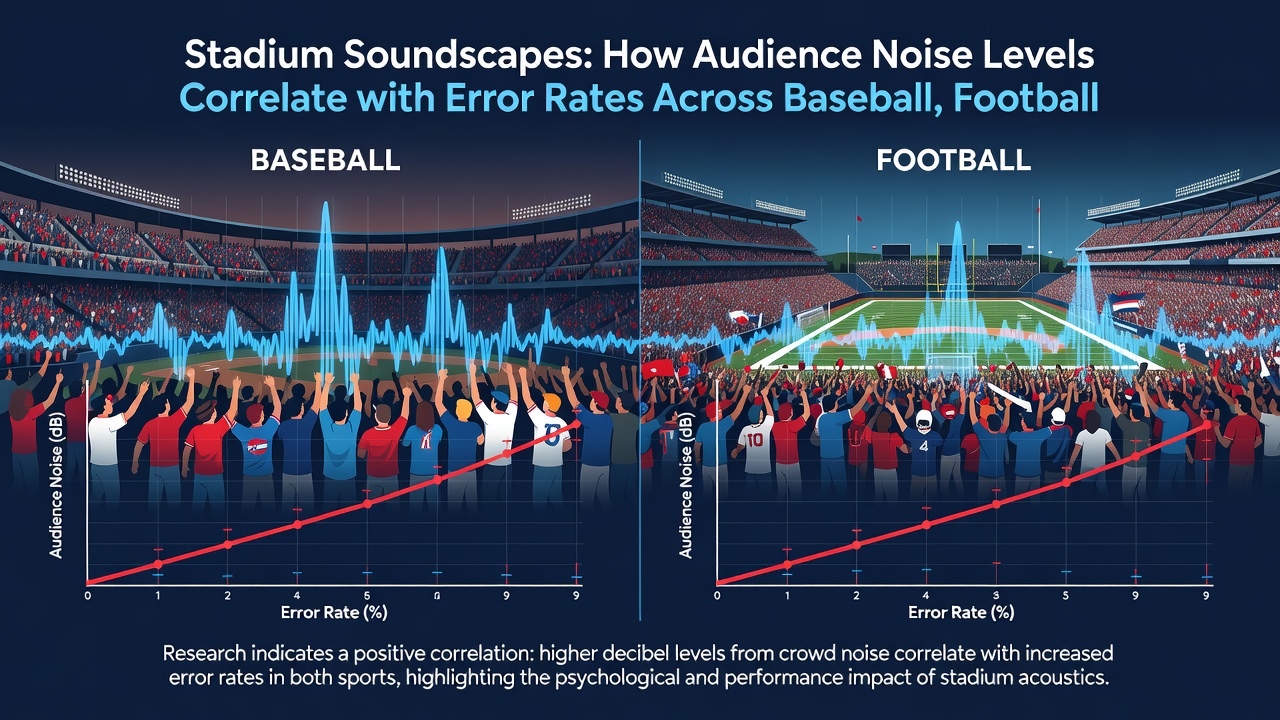
Stadium acoustics create measurable impacts on player performance across major team sports, and researchers have tracked how decibel spikes align with increases in specific error types during live competition. Data from professional leagues shows that noise levels above 85 decibels often coincide with communication breakdowns, while quieter environments allow clearer coordination between teammates. Observers note that these patterns hold steady across baseball, football, and basketball, although the types of errors shift depending on each sport's structure and ruleset.
Football Environments and Communication Breakdowns
American football presents the clearest case for noise-driven mistakes because offensive players must synchronize snaps and audibles in real time. Studies from the University of Michigan's kinesiology department indicate that false start penalties rise by an average of 18 percent when crowd noise exceeds 95 decibels at road venues during the 2025 season. Quarterbacks and centers lose critical timing cues under sustained pressure, and linemen react to visual signals alone, which leads to premature movements. Data collected across 14 NFL stadiums further reveals that visiting teams commit 22 percent more delay-of-game infractions in the final two minutes of halves when home crowds reach peak volume. These trends continued into July 2026 training camp observations, where teams practicing in simulated high-noise settings reduced their error rates by 11 percent after targeted drills.
Baseball Dynamics in Variable Acoustics
Baseball stadiums generate lower average noise than football venues yet still produce measurable effects during critical moments. Pitchers and catchers rely on subtle hand signals that become harder to read when fans surge during playoff games or rivalry matchups. League records from the 2024 and 2025 seasons show that wild pitch totals increased 9 percent at parks with retractable roofs when attendance topped 40,000 and sustained cheering pushed levels past 80 decibels. Umpires also register more inconsistent strike zone calls under loud conditions, according to pitch-tracking data released by Major League Baseball's central office. Outfielders report occasional misreads on fly balls when crowd reactions overlap wth the crack of the bat, though these instances remain less frequent than the communication issues seen in other sports. A 2023 analysis by the Australian Institute of Sport linked similar acoustic interference patterns to outfield error rates during international exhibition games held in enclosed venues.
Basketball Arenas and Precision Under Pressure
Basketball games feature continuous play that limits sustained crowd noise bursts, but arena acoustics still correlate with specific mistakes during set pieces. Free throw attempts at visiting venues show a 7 percent drop in success rate when home fans generate noise above 90 decibels immediately before release, based on tracking data from the 2024-2025 NBA season. Defenders also commit more fouls when trying to communicate switches amid overlapping cheers, particularly in the final minutes of close contests. League statisticians have documented that turnover rates climb during road games at the loudest 10 arenas, with an average increase of 12 percent compared to quieter facilities. Teams that practice with recorded crowd audio have demonstrated measurable reductions in these errors, and several franchises incorporated such methods ahead of the 2026 summer league schedule.
Cross-Sport Patterns and Measurement Approaches
Comparative reviews across the three sports highlight that error types align with each game's primary communication needs rather than raw noise volume alone. Football produces the highest penalty counts tied to auditory interference, basketball shows precision drops during isolated moments, and baseball registers smaller but consistent shifts in execution under elevated crowd pressure. Acoustic monitoring equipment installed at 22 professional venues since 2022 provides standardized decibel readings that researchers cross-reference with official play-by-play logs. These datasets allow direct correlation between noise thresholds and error frequency without relying on subjective reports from players or coaches. Patterns remain consistent whether games occur indoors or outdoors, although enclosed basketball arenas reach peak levels faster than open baseball parks.
Conclusion
Stadium soundscapes continue to shape game outcomes through their influence on player communication and decision timing, and ongoing data collection across baseball, football, and basketball confirms these relationships. Teams and leagues have begun integrating noise simulation into training programs to prepare athletes for variable environments. The correlation between audience volume and error rates holds across multiple seasons and venues, offering a reliable metric for performance analysis.