Rulebook Overhauls and the Quiet Shifts They Trigger in Seasonal Stat Leaders Across Gridiron, Diamond, and Court Leagues
Mara Richter · Jul 10, 2026
Rulebook Overhauls and the Quiet Shifts They Trigger in Seasonal Stat Leaders Across Gridiron, Diamond, and Court Leagues
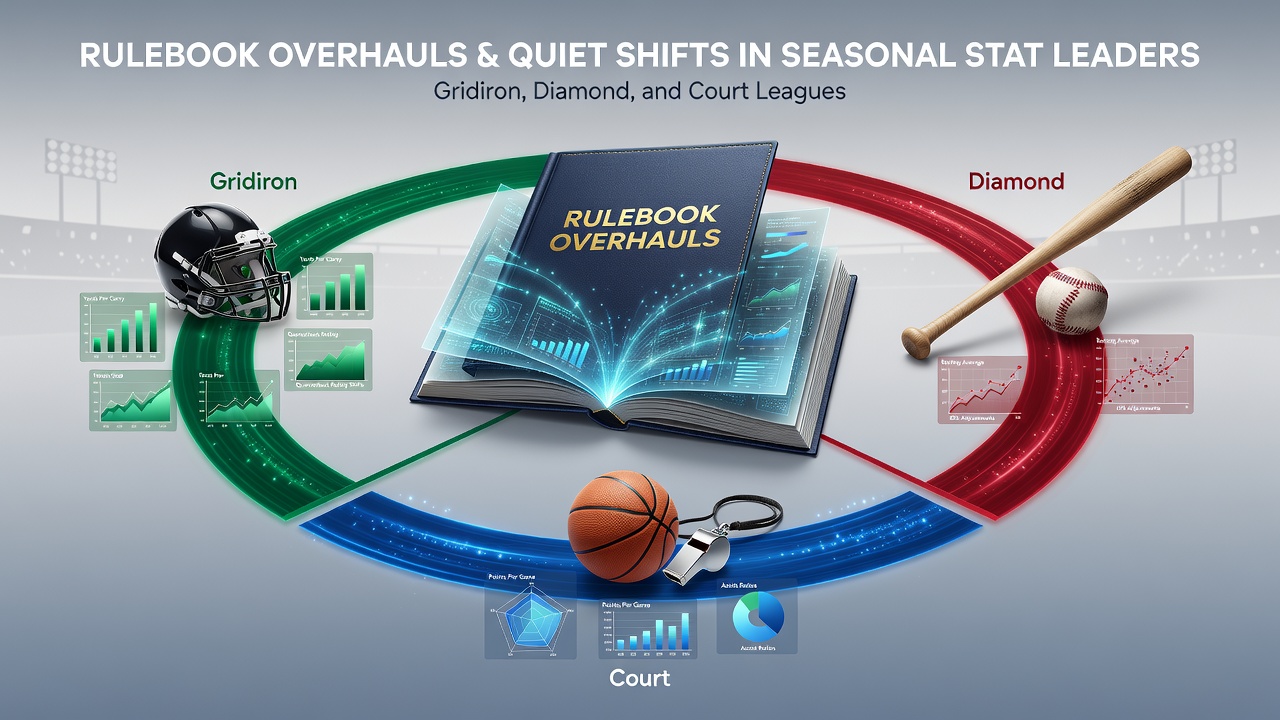
Rule modifications implemented across major professional leagues have produced measurable alterations in seasonal statistical distributions, and these patterns appear consistently in gridiron, diamond, and court competitions. Data compiled through mid-2026 indicates that targeted adjustments to gameplay mechanics have redirected leadership positions in key categories without requiring widespread commentary from observers. League administrators enacted several of these revisions prior to the 2025 campaigns, yet their cumulative influence on player rankings only became evident once full season datasets were processed in July 2026.
Gridiron Adjustments and Their Effect on Offensive Production Metrics
Modifications to kickoff alignment and contact restrictions in the National Football League altered return opportunities and defensive positioning schemes during the 2025 regular season. Teams adjusted coverage units accordingly, which correlated with a decline in average kick return yardage among specialists who previously topped those leaderboards. Simultaneously, tightened enforcement protocols around defensive holding calls produced an uptick in completed passes for quarterbacks operating from spread formations, and several signal callers who ranked outside the top ten in prior years moved into prominent positions on the passing yards chart. Researchers tracking these variables through official league play-by-play logs noted that the redistribution occurred gradually across multiple weeks rather than through abrupt spikes.
Diamond Modifications and Shifts in Batting and Fielding Categories
Baseball's continued refinement of pitch timer enforcement and defensive positioning limits introduced additional constraints on infield alignments beginning in the 2025 campaign. Batting average on balls in play rose for left-handed hitters who frequently directed ground balls toward the vacated right side of the infield, and several players who had posted middling contact rates in previous seasons climbed into the upper tiers of the league-wide batting average rankings. Pitching staffs responded by increasing the frequency of off-speed offerings early in counts, which in turn elevated strikeout totals for relievers who specialized in changeup command. Front office analysts reviewing these trends through aggregated Statcast feeds observed that the changes redistributed leadership in both traditional and advanced categories without altering overall run scoring environments in a uniform manner.
Court League Revisions and Redistribution of Scoring and Efficiency Leaders
The National Basketball Association adjusted foul-drawing criteria and defensive three-second enforcement during the 2025-2026 schedule, and these updates produced noticeable movement among players who previously dominated scoring and rebounding lists. Guards who operated frequently in transition saw increased opportunities for uncontested layups once referees applied stricter guidelines on help-side positioning, and several perimeter players advanced into the top twenty in points per game after finishing outside that range the prior year. Frontcourt athletes adapted by altering their positioning near the basket, which affected individual rebounding percentages while maintaining team-level control rates. Statistical modeling conducted by university research groups confirmed that the rule clarifications contributed to a broader spread of high-efficiency shooters across multiple roster archetypes.

Cross-League Patterns and Data Tracking Implications
Comparative reviews conducted by industry research organizations have highlighted parallel outcomes across the three sports, where rulebook revisions prompted teams to recalibrate personnel usage and schematic priorities. Tracking systems deployed since 2015 captured these transitions through high-resolution event data, and analysts identified consistent elevation of previously secondary statistical contributors into leadership positions. The patterns emerged most clearly when datasets were segmented by position group and matchup context rather than aggregate team totals. Observers reviewing reports from multiple governing bodies noted that the quiet nature of these shifts stemmed from incremental implementation timelines that avoided single-season overhauls.
Conclusion
Rulebook changes continue to reshape statistical hierarchies across gridiron, diamond, and court leagues through targeted adjustments that influence player opportunities and team strategies. Evidence drawn from official play logs and performance databases demonstrates that leadership positions in seasonal categories have redistributed in measurable ways during recent campaigns. These outcomes underscore the interconnected relationship between regulatory frameworks and the metrics that define individual and team success in professional athletics.