Rule Adjustments Across Major Sports Leagues Reshape Scoring Patterns and Defensive Standards
Cameron Otto · Jul 1, 2026
Rule Adjustments Across Major Sports Leagues Reshape Scoring Patterns and Defensive Standards
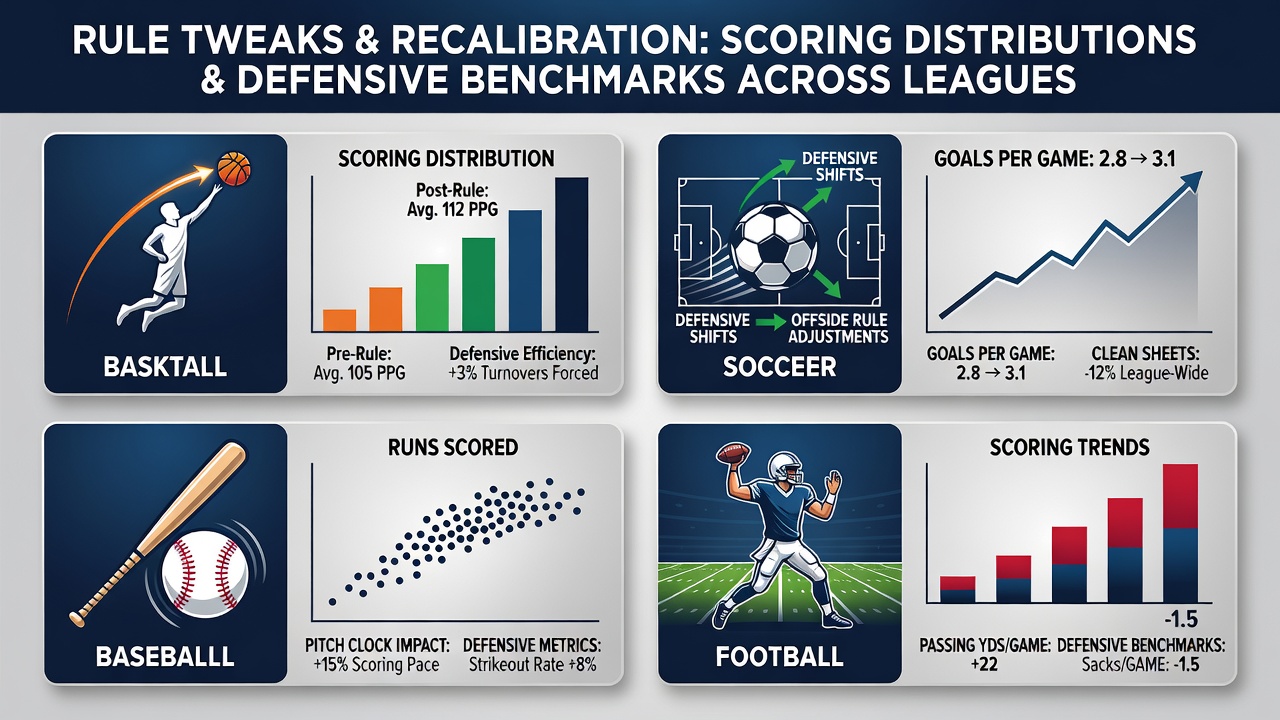
Rule modifications implemented by major leagues since the mid-2010s have produced measurable shifts in how points accumulate and how defenses operate across basketball, soccer, baseball, and football circuits. League officials track these changes through official statistical databases, and data compiled through July 2026 shows consistent patterns where offensive outputs rise while certain defensive metrics adjust downward in response to new constraints on player positioning and game flow.
Basketball Adjustments and Resulting Distributions
The NBA introduced tighter enforcement of defensive three-second violations alongside modifications to the foul call review process in recent seasons, and these steps coincided with an increase in average points per game from 110.3 in 2018-19 to 114.7 by the 2025-26 campaign according to league records. Three-point attempts per team per game climbed from 32.0 to 37.5 over the same span, while interior defensive stops declined as perimeter spacing expanded. College conferences adopted parallel spacing rules in 2024, and NCAA data indicate similar rises in made three-pointers per contest along with reductions in block rates inside the paint. Observers note that teams adjusted by deploying more switchable defenders, which redistributed defensive responsibility away from traditional rim protectors toward versatile perimeter athletes.
Soccer Rule Changes and Metric Recalibrations
IFAB approved experimental protocols for semi-automated offside technology and adjusted handball interpretations beginning in 2022, and UEFA competitions recorded an uptick in goals per match from 2.82 in 2020-21 to 3.14 by 2025-26. Tackle success rates in the Premier League dropped slightly as referees applied stricter contact thresholds, while through-ball completions rose because defenders hesitated on marginal offside decisions. South American confederation leagues implemented comparable video review timelines in 2025, and CONMEBOL statistics reveal parallel increases in open-play goals alongside fewer successful last-man tackles. Analysts tracking player tracking data from multiple federations find that midfielders now cover greater distances in transition phases as defensive lines sit deeper to avoid automated flag triggers.
Baseball Pitch-Clock and Shift Regulations
MLB instituted a 15-second pitch clock with bases loaded and banned the defensive shift in 2023, and official game logs show batting average on balls in play rose from .292 in 2022 to .301 in 2025 while strikeout rates stabilized near 22 percent. Home-run totals per game increased modestly, yet ground-ball double-play rates fell because infielders could no longer stack one side of the diamond. Minor-league affiliates adopted identical timing rules two years earlier, and those datasets demonstrate accelerated game times alongside higher on-base percentages for left-handed hitters who previously faced overloaded defenses. Defensive metrics such as ultimate zone rating for corner infielders declined in several cases, prompting clubs to emphasize range and first-step quickness over stationary positioning.
Football Penalty and Protection Modifications
The NFL strengthened enforcement of low hits and expanded the defensive-holding review window in 2021, and league play-by-play archives indicate passing yards per game rose from 255.2 in 2019 to 268.4 by 2025 while sack totals per team dropped from 42 to 37. Interception rates also decreased as quarterbacks gained extra time in the pocket before contact thresholds triggered flags. Canadian Football League officials aligned several roughing-the-passer criteria with NFL standards in 2024, and resulting statistics show comparable gains in net passing yards alongside reductions in quarterback pressures recorded by tracking systems. Defensive backs adjusted coverage techniques toward zone principles that minimize physical contact, which redistributed tackle production toward linebackers and reduced big-play defensive takeaways in several divisions.
Cross-League Patterns and Data Integration
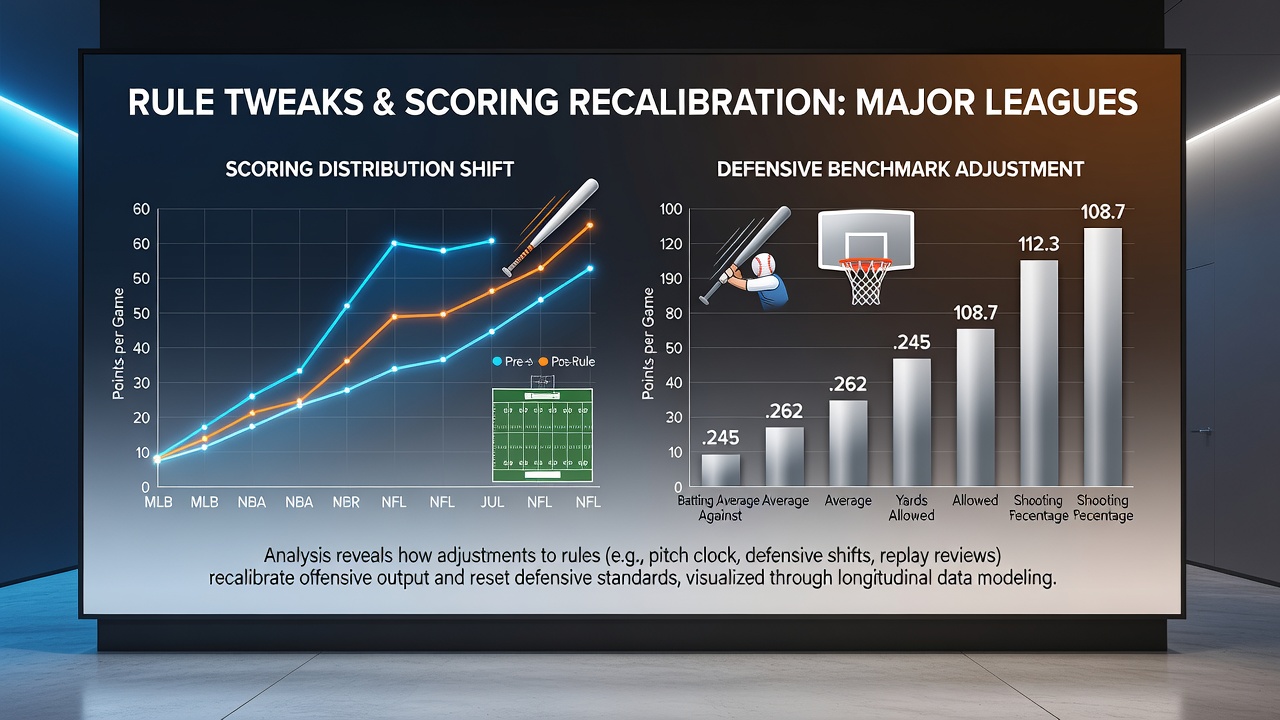
Studies from academic research groups at institutions in North America and Europe have examined aggregated datasets and found that scoring distributions widen when rules limit defensive congestion, while defensive benchmarks such as blocks, tackles, and sacks compress under stricter contact enforcement. League statisticians in July 2026 continue to monitor wearable-derived metrics that quantify acceleration and deceleration changes, and these streams reveal athletes reallocating effort toward speed maintenance rather than physical disruption. International federations share anonymized tracking protocols that allow direct comparison of how similar rule language produces parallel effects in different sports, and preliminary cross-sport models indicate that offensive efficiency gains appear within two seasons while defensive personnel realignment requires three to four years to stabilize.
Conclusion
Rule adjustments continue to recalibrate both scoring distributions and defensive benchmarks across basketball, soccer, baseball, and football circuits as leagues collect additional seasons of data. Official records and independent tracking studies document the resulting shifts in player roles, spatial usage, and statistical outputs, providing a factual basis for ongoing evaluation of competitive balance in each sport.