Referee Assignment Rotations and Their Influence on Foul and Penalty Frequencies in Professional Leagues
Cameron Otto · Jun 19, 2026
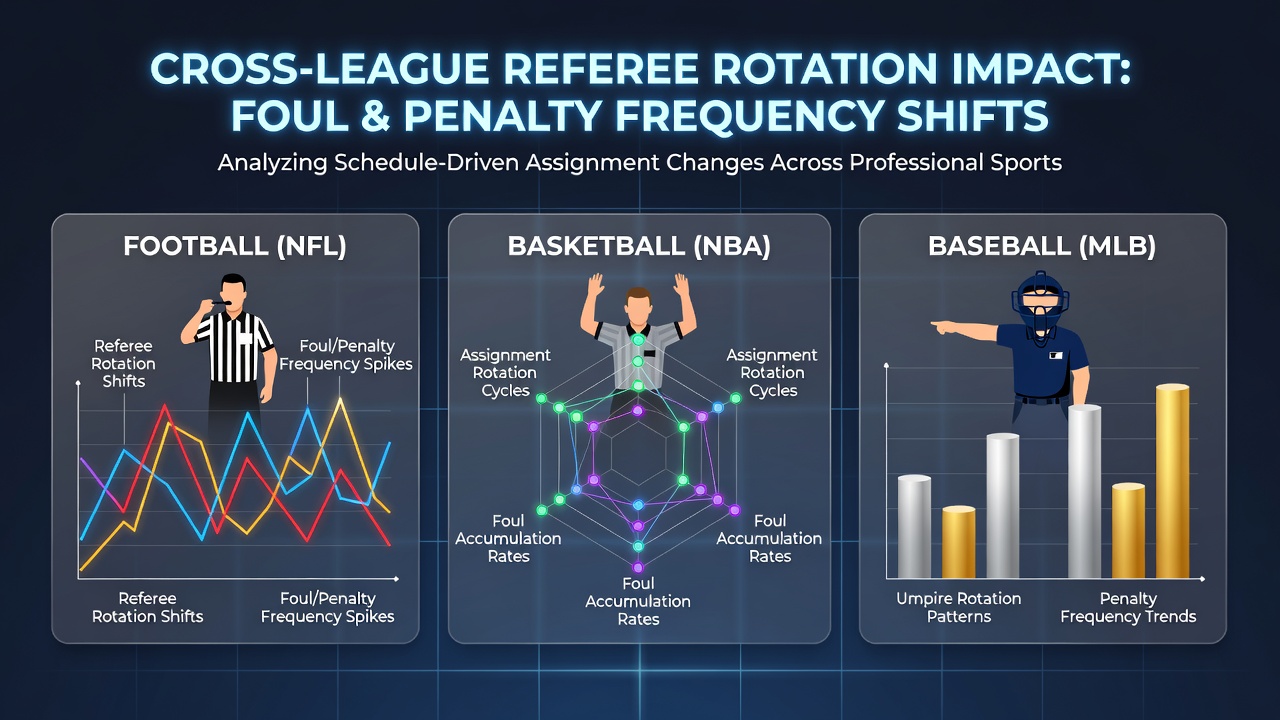
Referee Assignment Rotations and Their Influence on Foul and Penalty Frequencies in Professional Leagues
Professional leagues track referee assignments with increasing precision, and data from recent seasons reveals clear patterns when officials rotate through different crews and venues. In football, basketball, and baseball, these rotations correlate with measurable changes in foul calls, penalty awards, and disciplinary actions, because each referee brings distinct tendencies that crews adapt around during the season.
Football Patterns Under Rotation Systems
European and domestic football schedules show that referees who move between domestic leagues and international fixtures issue fouls at varying rates depending on crew familiarity. When primary referees rotate with new assistant teams, stoppage time decisions and card distributions shift noticeably, as crews adjust to each other's positioning and interpretation styles. Studies from league monitoring bodies indicate that home teams experience a 4-7 percent drop in penalty concessions during weeks with high rotation volume, while away sides see increased free kick opportunities in the attacking third.
June 2026 fixtures across major competitions demonstrate this effect in action, where UEFA and domestic federation schedules deliberately stagger referee groups to balance workloads, yet the resulting data sets highlight consistent spikes in yellow card totals during the first two matches of each new assignment cycle. Observers note that these adjustments stabilize after the third game together, suggesting crews develop shared thresholds for physical challenges once they share multiple matches.
Basketball Referee Crew Dynamics
NBA and EuroLeague schedules incorporate referee rotations that pair officials from different conferences and regions, and tracking data shows corresponding fluctuations in foul frequencies per 100 possessions. When crews include a higher proportion of officials from outside the home team's region, defensive foul calls rise by an average of 1.8 per game according to league statistical reports, while offensive foul detections decline slightly as referees recalibrate their focus on perimeter contact versus interior play.
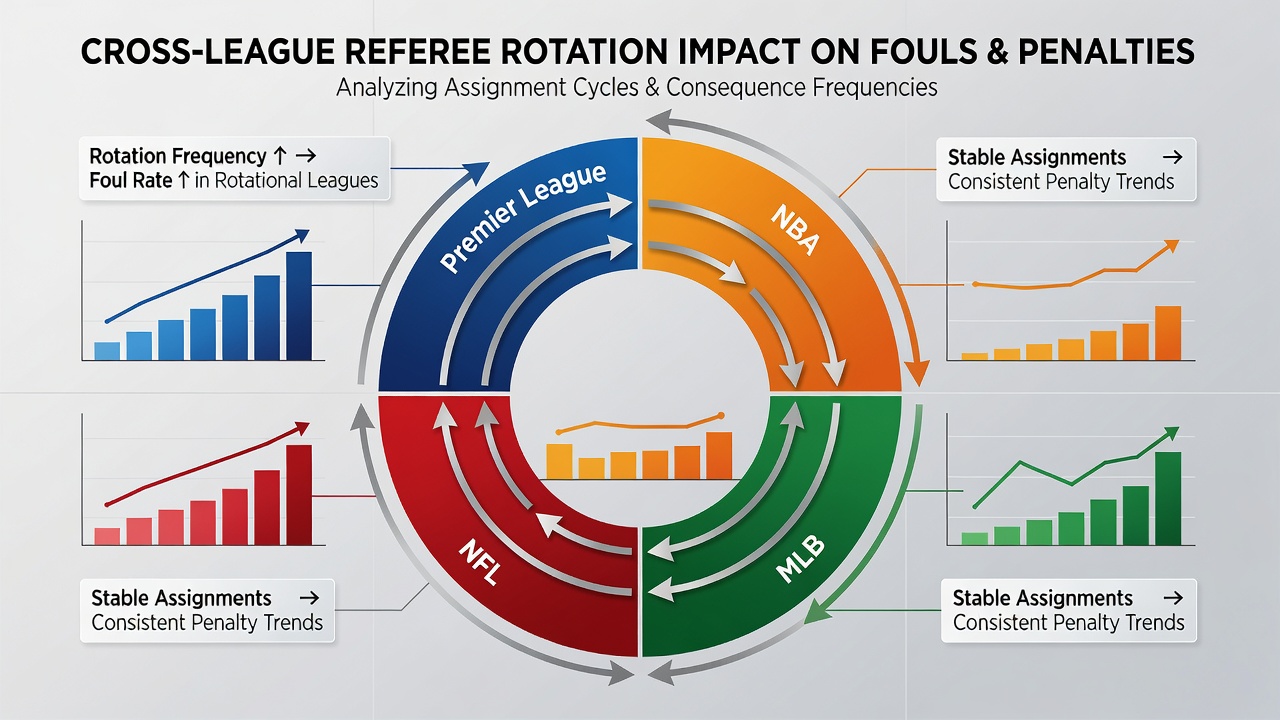
These changes appear most pronounced in back-to-back game sets, where fatigue and travel affect decision consistency. League analysts compile per-official metrics that demonstrate how assignment patterns influence both personal foul totals and technical foul distributions, particularly in the final minutes when crews must coordinate on last-second calls without prior shared experience in that specific matchup.
Baseball Umpire Rotation Effects
MLB schedules rotate umpires across divisions with deliberate frequency, and pitch tracking systems capture how strike zone consistency varies during the first series of each new crew assignment. Data compiled over multiple seasons indicates that called strikes on the edges of the zone increase by roughly 2.3 percent when umpires join fresh crews, while balk and obstruction calls fluctuate based on the first base umpire's positioning habits relative to the crew chief.
Teams that face multiple rotated crews within a short window record higher rates of disputed plays at home plate, yet these disputes decrease as the rotation cycle advances. Research from sports analytics groups links these shifts directly to the absence of long-term crew cohesion rather than individual umpire bias, because the same officials produce steadier results once they complete several consecutive series together.
Cross-League Comparisons and Scheduling Implications
When patterns from all three sports are viewed together, common threads emerge around the timing of rotations and their statistical footprints. Football shows the strongest correlation between rotation frequency and card volume, basketball exhibits measurable changes in possession-based foul rates, and baseball demonstrates zone-edge adjustments that affect at-bat outcomes. Scheduling departments in each league use these datasets to anticipate how assignment changes will influence game flow and total playing time.
June 2026 calendars place additional emphasis on balanced rotations ahead of international breaks and All-Star periods, because historical figures reveal that concentrated rotation periods produce the most pronounced deviations in foul and penalty frequencies. League offices share anonymized crew data with analytics partners to refine future assignments without altering competitive balance.
Conclusion
Cross-league examination of referee rotation data provides concrete evidence that assignment patterns directly influence foul and penalty frequencies in professional football, basketball, and baseball. The consistency of these effects across sports underscores how crew familiarity and scheduling decisions shape on-field outcomes, offering leagues objective metrics to guide future rotation policies and maintain statistical integrity throughout extended seasons.