How Video Review Systems Have Shifted Foul and Penalty Statistics in Basketball, Soccer, Baseball, and Football
Mara Richter · Aug 14, 2026
How Video Review Systems Have Shifted Foul and Penalty Statistics in Basketball, Soccer, Baseball, and Football
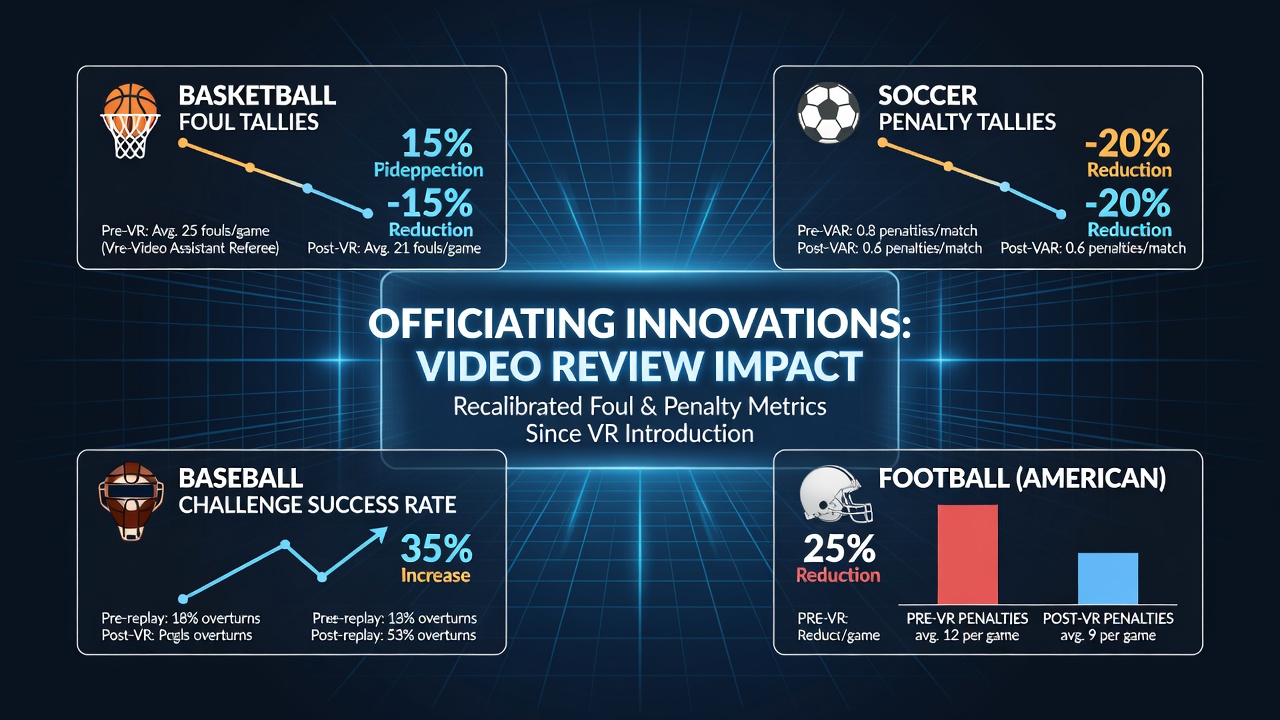
Video review technologies entered professional sports leagues at different points and produced measurable changes in how officials counted fouls and penalties, according to league records and independent analyses. These systems allowed reviews of specific plays, and data collected afterward shows adjustments in foul rates, penalty calls, and related statistics across basketball, soccer, baseball, and football.
Basketball Replay Expansions and Foul Adjustments
The NBA introduced expanded replay review protocols in the early 2000s, with further refinements after 2010 that permitted officials to examine potential flagrant fouls and out-of-bounds violations. League tracking data indicates that the number of flagrant foul calls rose in the seasons immediately following these updates, because reviews caught contact that live officials missed during fast-paced sequences. By the 2024-2025 season, average fouls per game had stabilized at levels slightly lower than pre-review eras in some categories, while technical fouls related to replay challenges showed modest increases.
College basketball programs adopted similar systems through NCAA guidelines, and researchers at institutions tracking game logs noted parallel shifts where block and charge calls underwent more frequent corrections after video confirmation. Those adjustments altered season-long foul tallies for individual players who previously accumulated quick fouls in contested situations.
Soccer VAR Implementation and Penalty Shifts
Video assistant referee protocols reached elite soccer through trials by the International Football Association Board starting in 2016, with full rollout at the 2018 World Cup and subsequent domestic leagues. Official match reports compiled by governing bodies reveal that penalty awards increased in reviewed situations during the first three years of VAR use, because clear incidents inside the box received confirmation that live officials could not always provide in real time. Red card tallies also showed recalibration, with some leagues recording fewer erroneous dismissals after video intervention became standard.
European competitions tracked these metrics closely, and figures released through UEFA channels demonstrate that offside-related decisions influenced foul counts indirectly when plays were restarted after reviews. As of August 2026, ongoing data collection continues to show stabilization in overall penalty rates compared to the initial spike observed right after introduction.
Baseball Replay and Call Accuracy Trends
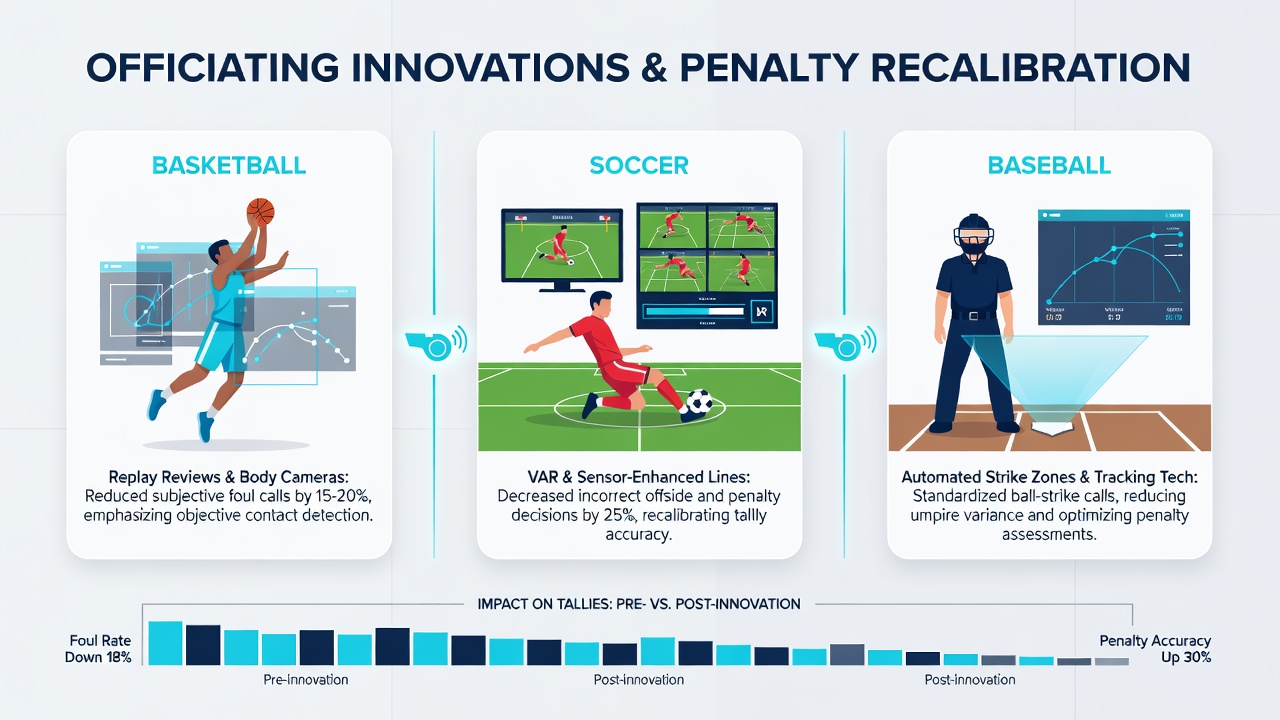
Major League Baseball expanded replay review in 2014 to cover home run boundaries, tag plays, and force outs, categories that intersect with certain rule violations. Statistical summaries from the league show that challenged calls resulted in overturn rates around 50 percent in early seasons, which adjusted the recorded tallies of safe and out decisions that carried penalty implications for baserunners. While traditional foul balls remained outside direct review, the system influenced pitcher-batter confrontations when catcher's interference or obstruction reviews occurred.
Minor league affiliates adopted parallel protocols, and collected data from those levels indicates similar patterns where replay reduced the cumulative effect of missed calls on game outcomes. Observers tracking long-term trends note that these changes produced steadier seasonal statistics for defensive plays once video confirmation became routine.
Football Instant Replay and Penalty Recalibrations
The NFL has maintained instant replay since 1986 with multiple rule expansions, including the addition of centralized review centers in later years. Game logs compiled by the league document that pass interference and holding penalties underwent more frequent corrections after replay reviews, leading to measurable drops in accepted penalties during certain seasons. Data from the NFL operations reports highlights how review frequency correlated with changes in the average number of flags thrown per game, particularly in high-contact situations.
College football programs followed with their own replay frameworks, and academic studies from North American universities examining Big Ten and SEC game data found comparable adjustments in penalty yards allowed after video review became standard. These shifts affected team totals for defensive penalties over full seasons without altering the fundamental structure of enforcement.
Cross-Sport Patterns in Review Outcomes
Across the four sports, video systems produced an initial period of higher review volume followed by adjustments in foul and penalty frequencies as officials adapted. League databases and external analyses, including those referenced in reports from the International Football Association Board, show that overturn rates settled into consistent ranges after several seasons. The technologies did not eliminate discrepancies entirely but provided documented corrections that altered cumulative tallies in each discipline.
Conclusion
Video review systems have delivered verifiable recalibrations to foul and penalty statistics in basketball, soccer, baseball, and football since their phased introductions. League records and independent tracking continue to capture these effects through 2026, offering clear numerical evidence of how officiating tools influence recorded outcomes in each sport.