How Refereeing Technology Has Reshaped Foul Calls and Ball Possession in International Team Sports
Mia Wagner · Jul 24, 2026
How Refereeing Technology Has Reshaped Foul Calls and Ball Possession in International Team Sports
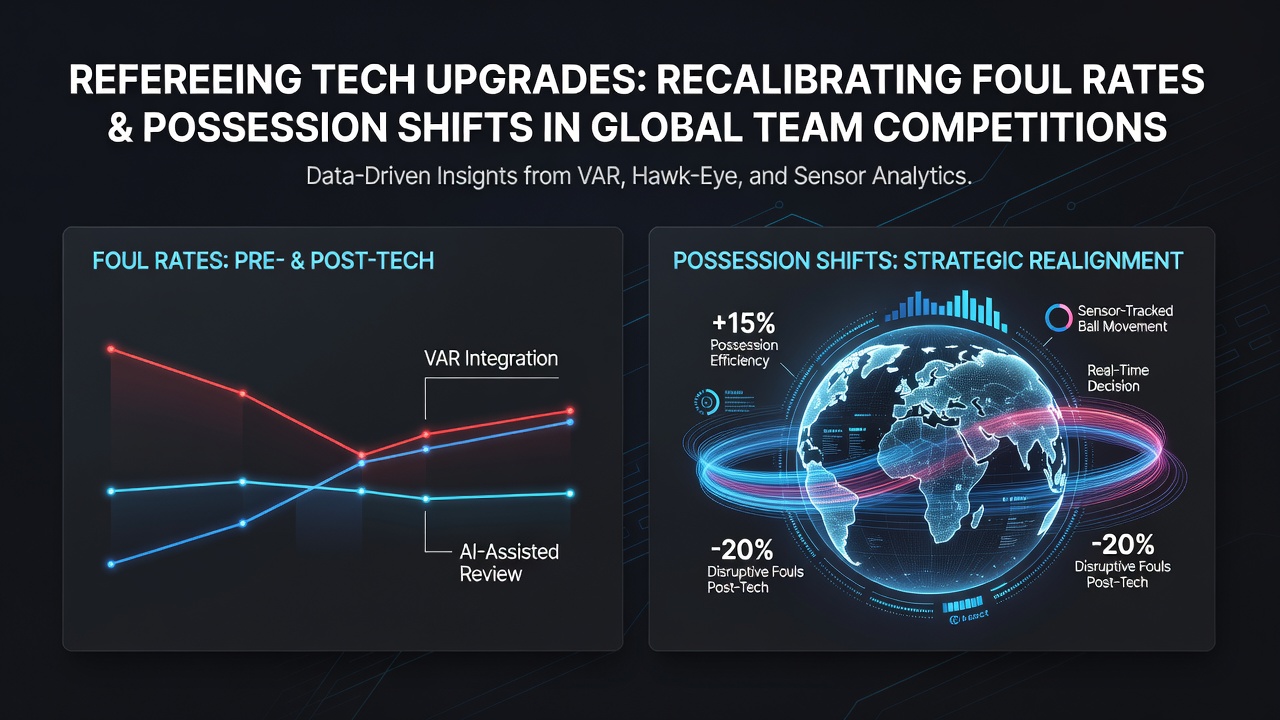
Refereeing technology has expanded across major team sports since the mid-2010s, with video assistant referee systems, goal-line sensors, and automated tracking tools altering decision accuracy in soccer, basketball, American football, and rugby. These upgrades have produced measurable shifts in foul detection rates and average possession times, according to league performance reports compiled through 2025. Data from governing bodies shows that precise reviews often reduce subjective calls while extending stoppages that influence how teams manage the ball.
Expansion of Review Systems Across Leagues
Video assistant referee protocols reached full integration in European soccer competitions by 2019, with the International Football Association Board mandating consistent application in FIFA and UEFA events. Similar replay centers appeared in the NBA for last-two-minute reviews starting in 2019, while the NFL refined its challenge system with additional booth reviews by 2022. Rugby introduced television match officials earlier, yet the cumulative effect across disciplines became evident after 2020 when multiple sports synchronized data feeds from on-field cameras and wearable sensors. Observers tracking these changes note that each upgrade introduced new thresholds for what constitutes a reviewable incident, which in turn affected baseline foul statistics.
Adjustments in Foul Detection Rates
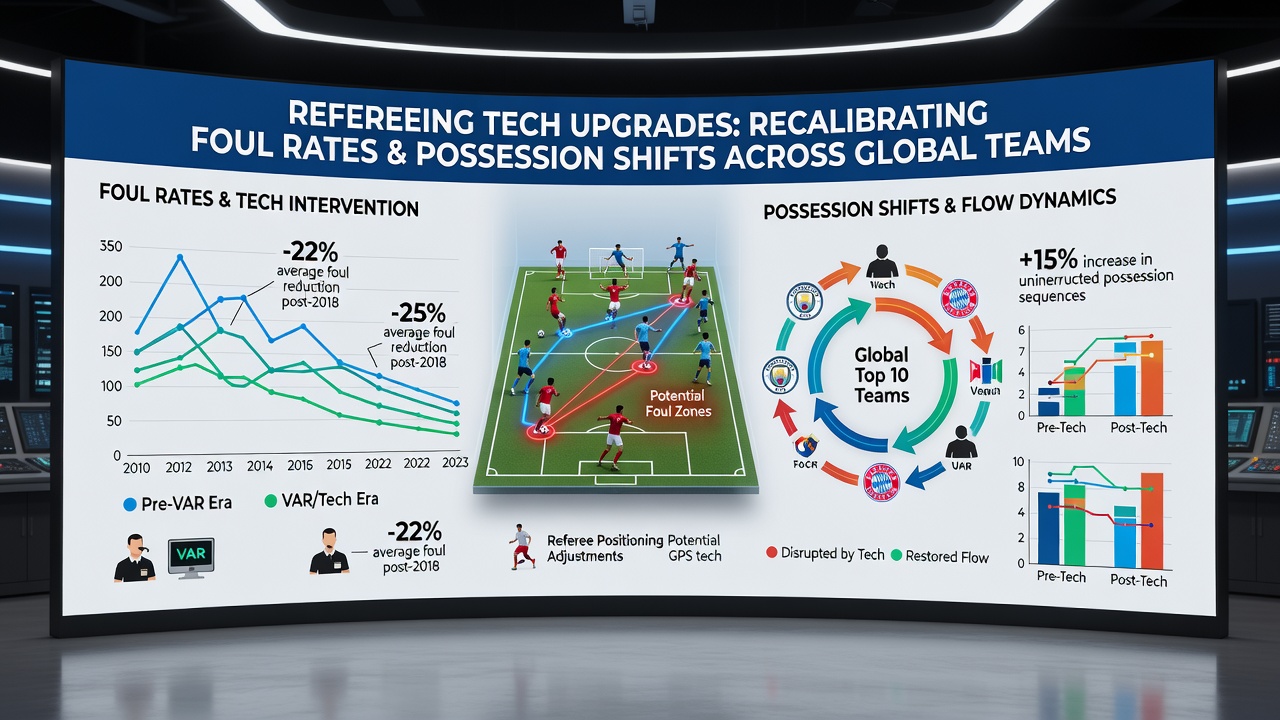
League statistics reveal that foul calls per game dropped in several top soccer divisions after VAR deployment. The English Premier League recorded an average of 20.8 fouls per match in the 2018-19 season before full VAR rollout, then settled near 18.4 fouls per match by the 2024-25 campaign according to Opta data streams. UEFA Champions League fixtures showed a parallel decline, with high-contact challenges reviewed more consistently and borderline infractions overturned at rates exceeding 35 percent in 2025. In the NBA, flagrant foul reviews increased from 2019 onward, yet overall personal foul totals per game stabilized rather than spiked because replay confirmation reduced erroneous whistles. NFL data from the same period indicates fewer unnecessary roughness penalties once booth officials gained access to multi-angle footage, though defensive holding calls rose slightly as tracking software highlighted jersey tugs invisible to live referees.
Shifts in Possession Metrics
Possession percentages and time-of-possession figures also moved once review systems altered stoppage patterns. Teams in leagues with frequent VAR interventions now experience longer interruptions after potential fouls, which disrupts rhythm and forces adjustments in pressing intensity. Bundesliga tracking from 2023 to 2025 shows average possession stretches shortened by 8 seconds per sequence in matches with multiple reviews, while uninterrupted passages lengthened in fixtures with fewer interventions. Basketball analytics from the NBA indicate that replay stoppages during the final minutes correlate with slight increases in half-court sets, because teams regain composure during the delay and reset offensive spacing. American football studies from the same window reveal that successful challenge reversals shift expected points and field position, prompting coaches to alter fourth-down decisions more often when accurate spotting data becomes available mid-drive.
Regional and Competition-Specific Patterns
European soccer competitions adopted centralized review hubs earlier than most other regions, producing the clearest longitudinal datasets. South American leagues followed with delayed but comparable implementations by 2023, and Asian confederation tournaments incorporated similar protocols ahead of 2026 events. In each case, foul rates converged toward lower averages once officials gained access to synchronized video, yet possession retention improved for teams that adapted pressing triggers to account for potential delays. Rugby union competitions in the southern hemisphere reported parallel trends, with television match official interventions reducing high-tackle penalties while extending ruck clearance times. These patterns emerged consistently across datasets gathered by confederation technical departments and independent performance analysts.
Developments Through Mid-2026
By July 2026, several competitions had introduced semi-automated offside technology and real-time foul detection pilots that further refined call timing. UEFA reported that offside reviews completed in under 15 seconds reduced overall match stoppage time compared with earlier manual VAR checks, while maintaining the same accuracy gains. NBA officials tested expanded instant-replay windows during the 2025-26 season, and preliminary figures indicated continued stabilization in foul differentials between home and away teams. Global tracking platforms now aggregate these metrics across continents, allowing direct comparisons between soccer, basketball, and gridiron schedules that share overlapping calendar windows.
Conclusion
Refereeing technology continues to recalibrate how fouls register and how possession flows in elite team competitions worldwide. Consistent data from multiple leagues demonstrates that review systems lower certain foul categories while reshaping the rhythm of uninterrupted play. Teams and analysts now incorporate these revised baselines into preparation routines, and governing bodies maintain ongoing calibration of review thresholds to balance accuracy with game flow.