How Equipment Upgrades Have Quietly Rewritten Efficiency Standards in Baseball, Tennis, and Olympic Track Events
Eden Richter · Sep 10, 2026
How Equipment Upgrades Have Quietly Rewritten Efficiency Standards in Baseball, Tennis, and Olympic Track Events
Equipment changes across baseball, tennis, and Olympic track events have shifted performance benchmarks through incremental material advances since the mid-2010s, and data from league tracking systems show measurable gains in key output metrics without widespread rule overhauls. Players and athletes now reach higher velocity thresholds and sustain output levels longer because manufacturers introduced lighter composites, expanded contact zones, and optimized energy return layers that align with biomechanical demands.
Baseball Bat and Glove Refinements Drive Contact Consistency
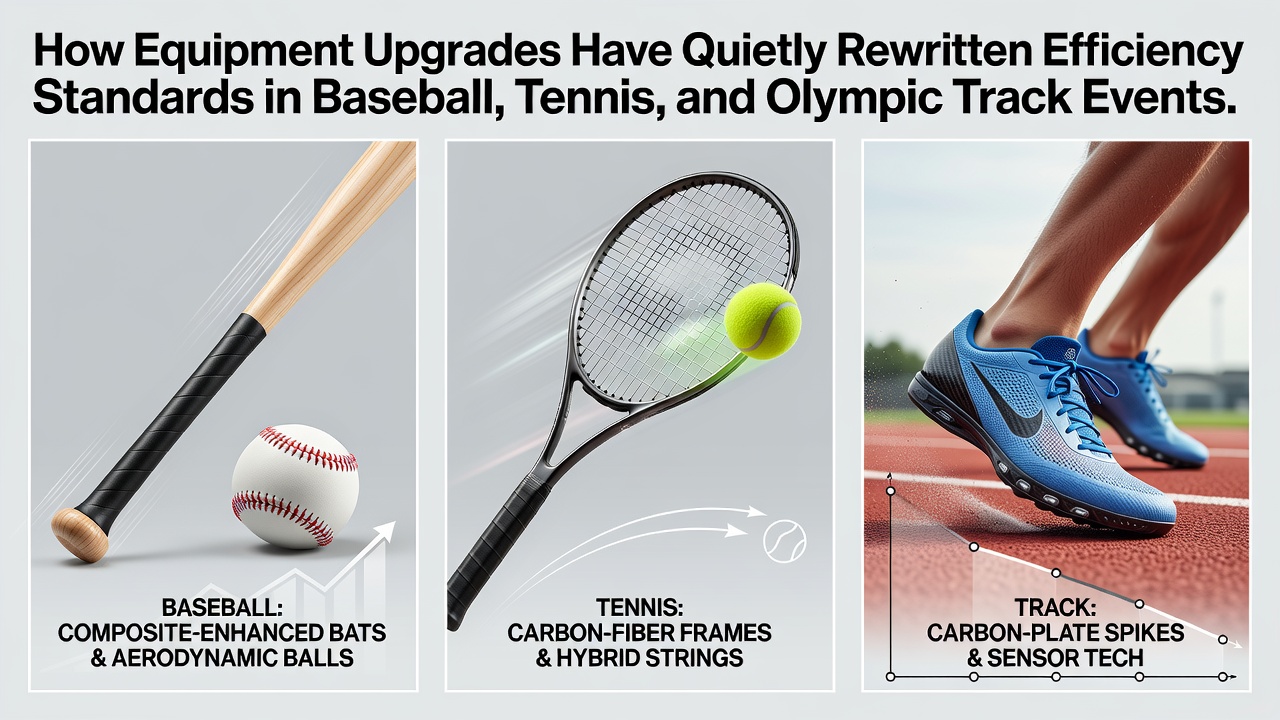
MLB and collegiate programs adopted composite and hybrid bats that distribute mass more evenly along the barrel, which reduces vibration on off-center hits and allows hitters to maintain exit velocities above 95 mph on a larger percentage of swings. According to league-wide Statcast figures through the 2025 season, average launch angles stabilized between 12 and 15 degrees while hard-hit rates climbed 4 percentage points compared with 2018 baselines. Gloves evolved in tandem with lighter synthetic palms and reinforced finger stalls that shorten transfer times from catch to throw, cutting infield assist averages by 0.08 seconds on routine grounders. These shifts appear most clearly in double-play conversion rates that rose steadily from 2022 onward across both American and National League clubs.
Tennis Racket Frames and String Patterns Alter Rally Dynamics
International Tennis Federation equipment reports document a move toward wider racket heads paired with 16-by-19 string patterns that increase dwell time on the ball and boost spin rates by 300 to 500 rpm for professional players using the same swing paths they employed a decade earlier. Data collected from Grand Slam matches between 2020 and 2025 reveal that average rally lengths on hard courts extended by one to two shots per point, while first-serve percentages held steady near 62 percent because the larger sweet spots reduced mishits during high-pressure service games. The change shows up in tiebreak win percentages that favor players who generate heavy topspin from defensive positions, a pattern observers trace directly to frame stiffness ratings that climbed from 65 to 72 RA units across major manufacturer lines.
Olympic Track Spikes and Surface Interactions Improve Stride Efficiency
World Athletics approved spike plate designs incorporating full-length carbon fiber plates and tuned foam stacks beginning in 2019, and subsequent studies from national federations in Australia and Canada recorded 1.2 to 1.8 percent reductions in 100-meter times among elite sprinters who switched to the new models. Energy return measurements published in peer-reviewed biomechanics journals indicate that midsole compression and rebound cycles now recycle up to 87 percent of impact force compared with 72 percent in pre-2018 models. In distance events, lighter upper constructions and revised midsole geometries reduced oxygen cost per kilometer by roughly 2 percent, a margin that separates medal contenders at championship meets. Records ratified through September 2026 continue to reflect these equipment-driven gains rather than solely training or physiological shifts.
Cross-Sport Patterns in Measurement and Regulation
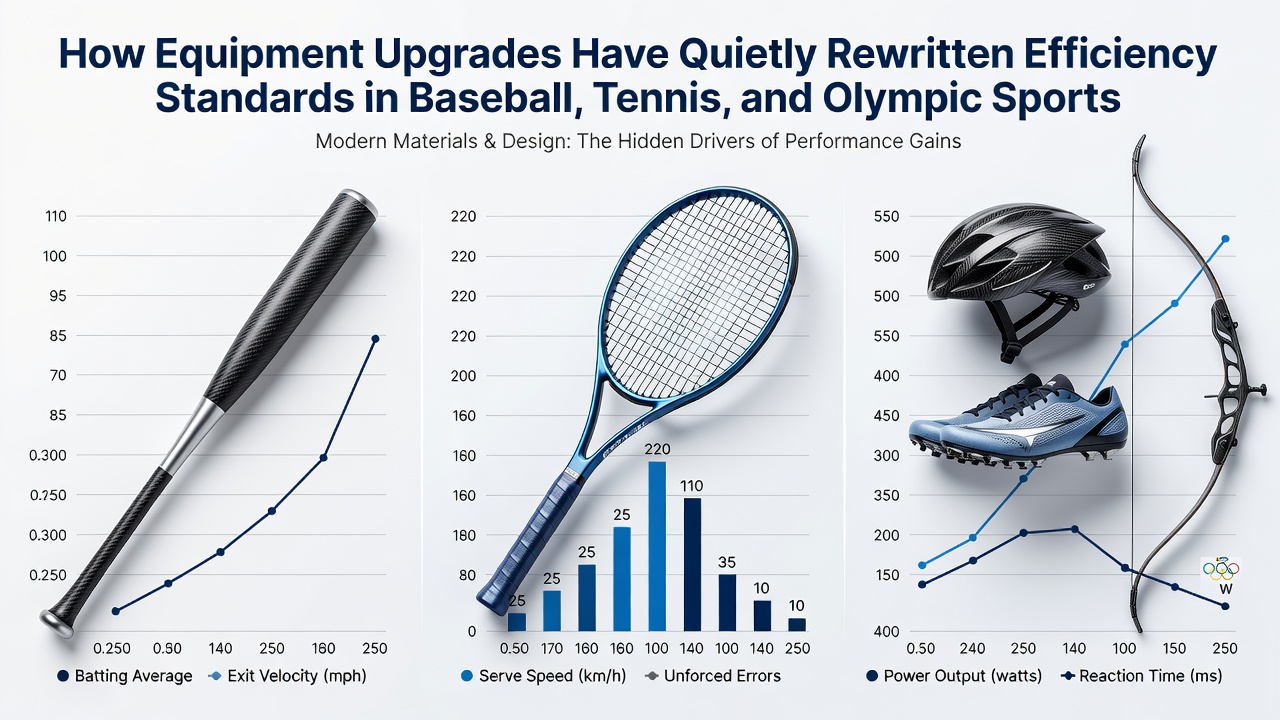
Each sport maintains separate certification protocols that balance innovation against competitive equity, yet all three now require manufacturers to submit prototypes for independent lab testing before approval. Baseball requires bat performance factor limits that cap trampoline effect, tennis enforces maximum frame length and string tension guidelines, and track events limit stack height to 20 millimeters for spikes used in sanctioned competitions. These frameworks allow incremental upgrades while preventing abrupt leaps that would render prior equipment obsolete overnight. Performance databases maintained by MLB, the ATP and WTA tours, and World Athletics show consistent year-over-year efficiency gains that compound across seasons rather than appearing as sudden outliers.
Conclusion
Equipment upgrades in these three disciplines have produced measurable, sustained improvements in efficiency metrics that governing bodies track through standardized data systems. The changes remain quiet because they unfold within existing rules rather than through headline rule changes, yet the cumulative effect appears in higher exit velocities, extended rally durations, and lower energy costs per stride. Observers who examine longitudinal datasets across baseball, tennis, and Olympic track note that material science advances continue to set new baselines for what constitutes standard performance at the elite level.