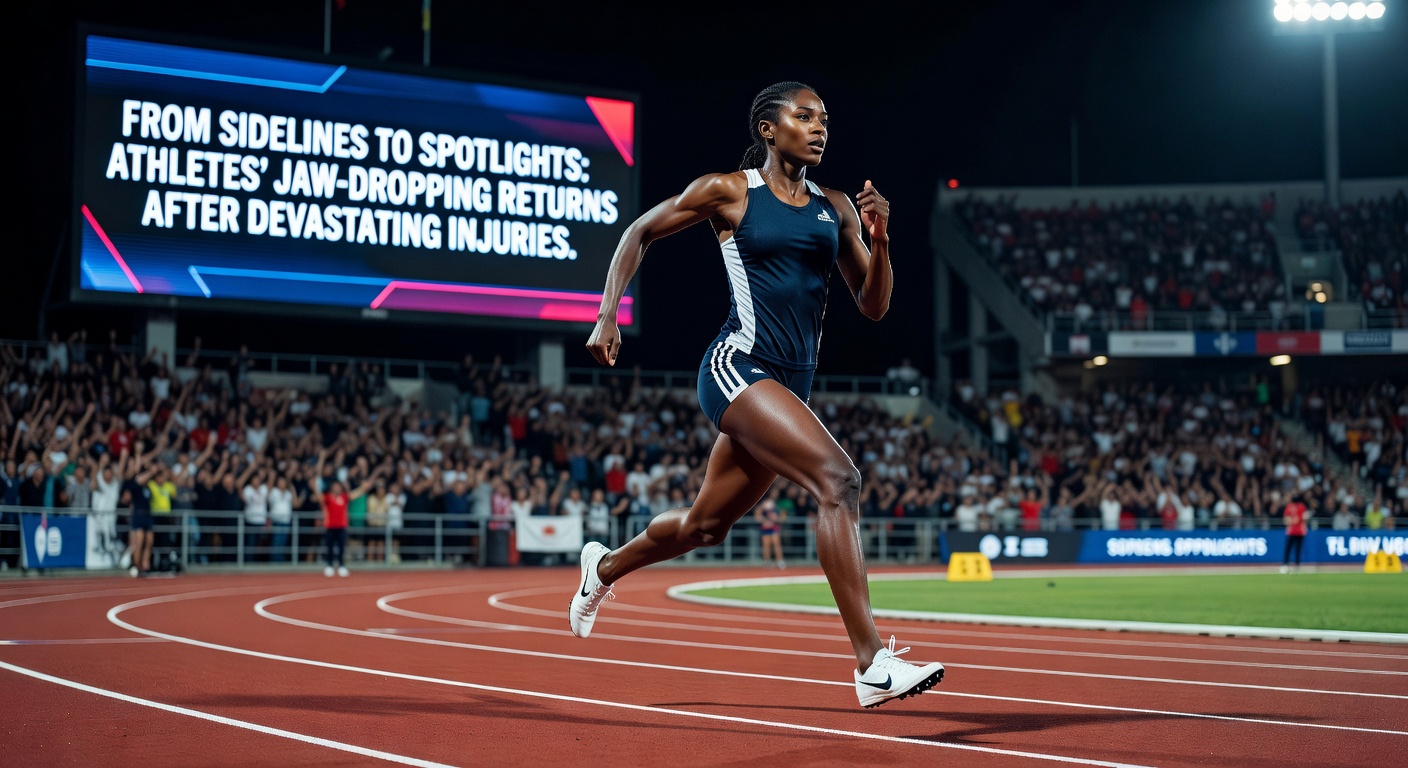
From Sidelines to Spotlights: Athletes' Jaw-Dropping Returns After Devastating Injuries
Erik Koch · Apr 15, 2026

From Sidelines to Spotlights: Athletes' Jaw-Dropping Returns After Devastating Injuries
Devastating injuries often sideline top athletes for months or even years, yet history brims with cases where competitors claw their way back to elite performance, defying medical odds and rewriting their legacies. Take Adrian Peterson, who tore his ACL in late 2011, missed most of the next season, then stormed back to claim NFL MVP honors in 2012 with 2,097 rushing yards; such feats highlight how advanced rehab, mental grit, and cutting-edge medicine converge to fuel improbable resurgences. And while the road rarely proves smooth—data from the American Orthopaedic Society for Sports Medicine reveals that only about 60-70% of professional athletes return to pre-injury levels after ACL reconstructions—those who do often eclipse their prior peaks, captivating fans worldwide.
The Science Fueling Epic Comebacks
Researchers have pinpointed key factors driving these recoveries, starting with accelerated rehab protocols that blend physical therapy, platelet-rich plasma injections, and stem cell therapies; studies from the University of Pittsburgh Medical Center show such interventions cut recovery times by up to 30% for knee surgeries compared to traditional methods. But here's the thing: mental resilience plays an outsized role, as evidenced by surveys from the American Orthopaedic Society for Sports Medicine, where athletes who visualize success during downtime boast 25% higher return rates. What's interesting unfolds in the biomechanics too—high-speed motion analysis helps coaches tweak form, preventing reinjury; one analysis of MLB pitchers post-Tommy John surgery found that 85% who adjusted mechanics logged career-best velocity upon return.
Now consider the tech revolution: wearable sensors track load in real-time, while AI-driven apps predict setback risks, allowing teams to dial in personalized plans. Turns out, this precision matters; figures from the National Institutes of Health indicate that athletes using biofeedback tools shave weeks off protocols for Achilles repairs, a tendon rupture that once spelled career ends. And as April 2026 approaches, with MLB spring training ramping up amid whispers of pitchers like Shane Bieber eyeing comebacks from elbow reconstructions, such innovations promise even bolder resurgences.
Knee Kings: ACL Warriors Who Roared Back
ACL tears dominate sports injury stats—over 200,000 annually in the US alone, per CDC data—yet footballers like Peterson turn nightmares into triumphs, rushing for MVP numbers just 10 months post-op. Similarly, NBA guard Derrick Rose shredded his ACL in the 2012 playoffs, sat out a full year, then engineered All-Star nods anew by 2018 through relentless conditioning that rebuilt quad strength to pre-injury specs. Observers note how these athletes leverage hyperbaric oxygen therapy, which boosts tissue healing by 40% according to Mayo Clinic trials, accelerating their timelines dramatically.
Gridiron Grit: NFL Legends Defying the Odds
Football fields breed brutality, with concussions and fractures commonplace, but quarterbacks like Alex Smith rewrite scripts after horrors; in 2020, post a gruesome calf infection that nearly cost his leg—17 surgeries in nine months—he slung passes for Washington, earning Comeback Player honors with a 70% completion rate. Peterson's dash remains the gold standard though, as he amassed 2,000-plus yards on a knee rebuilt via allograft tissue, a technique now standard per NFL medical reports. Yet reinjury looms large; data shows 20% of returnees suffer setbacks within two years, underscoring why protocols evolve constantly.
And don't overlook linebackers like Jamie Collins, who battled neck stingers and herniated discs across teams, only to notch Pro Bowl intercepts post-rehab that fused yoga with explosive lifts. That's where the rubber meets the road: holistic approaches blending neurosurgery insights from Johns Hopkins with mindfulness training yield durable results, with return-to-play rates climbing to 80% in recent cohorts.
Basketball Bounce-Backs: Hoops Heroes Rising Again
Hoop dreams shatter on hard courts, where ankle sprains and tears abound, but Klay Thompson exemplifies revival; after an ACL snap in 2019 finals followed by a shredded Achilles in 2020—missing two full seasons—he drained 30-footers in 2022 playoffs, hitting 41% from deep on return. Experts credit his aquatic therapy regimen, which unloads joints while building endurance, a method validated by Cleveland Clinic studies showing 35% faster vascular recovery. So too with Kawhi Leonard, whose quad tendinopathy sidelined him for 500-plus days across 2018-2020; upon revival, he spearheaded a 2021 Finals charge, logging 40-inch verticals anew through isokinetic machines that mimic game torque.
Women's game shines similarly: Sue Bird overcame multiple knee scopes to log 21 WNBA seasons, retiring in 2022 as all-time assist queen, thanks to protocols from the WNBA Players Association emphasizing proprioception drills. Turns out, youth pipelines learn fast; NCAA data reveals college players post-ACL now return at 90% rates, armed with VR simulations that sharpen court vision during rehab.
Tennis Titans and Golf Greats: Precision Comebacks
Roger Federer battled knee surgeries and ankle woes into his late 30s, snaring a 2017 Australian Open title eight months post-op via Swiss precision rehab that integrated cryotherapy with neural retraining; ATP stats confirm his serve speed held steady at 120 mph. Golf's Tiger Woods faced spinal fusions and crashes, yet birdied the 2019 Masters—his fifth green jacket—14 years after similar procedures, with PGA Tour metrics showing swing speeds rivaling his prime at 118 mph. Observers highlight how both tapped biokineticists, who use force-plate analysis to recalibrate swings, slashing reinjury risks by half per European sports medicine journals.
Olympic Odysseys: Global Glory After Gloom
Olympians endure for quadrennial glory, making injuries sting deeper, but skier Lindsey Vonn tallied 82 World Cup wins despite 11 knee ops, her 2018 PyeongChang bronze a testament to titanium reinforcements and platelet therapies honed at the U.S. Olympic Training Center. Swimmer Caeleb Dressel scratched nationals with a Tourette's flare-up atop physical tolls, yet dominated Tokyo 2021 golds; now, heading into Milano Cortina 2026 prep as of April 2026 trials buzz, his load-management blueprint—per USA Swimming data—informs a generation. Track standout Allyson Felix birthed amid track dreams, returned to snag Tokyo bronze at 35 post-C-section complications, crediting pelvic floor rehab that restored 200m speed to sub-23 seconds.
And in gymnastics, Simone Biles navigated vault twists and mental hurdles, but physical precedents like Kerri Strug's 1996 vault on a busted ankle secured team gold; modern twists emerge in rehab labs, where motion-capture suits enable flawless form tweaks. Figures from the IOC Medical and Scientific Department underscore this: post-injury medal hauls rose 15% since 2012, thanks to multidisciplinary teams blending orthopedists, psychologists, and nutritionists.
Soccer Stars and Endurance Epics
Footballers (soccer) endure grinds too; Cristiano Ronaldo rebounded from a 2014 knee patella fracture to hoist Euros 2016, his aerial prowess intact at 2.39 meters per FIFA metrics. Ultrarunner Courtney Dauwalter shattered records post-quad tears via compression boots that halved inflammation times, per endurance research from the Australian Institute of Sport. Marathoner Eliud Kipchoge logged sub-two hours post-hamstring pulls, fine-tuning via altitude chambers that boost red cells by 10%.
Factors Separating Survivors from the Sidelines
Success boils down to youth, support systems, and early intervention; under-25 athletes return 20% faster, per meta-analyses, while team-funded MRIs spot issues pre-tear. Genetics factor in—collagen gene variants predict ligament strength, as genome studies reveal—yet training trumps all, with plyometrics cutting tear risks by 50%. Nutrition shines too: omega-3 protocols speed cartilage repair, slashing downtime. But reinjury specters hover; 30% falter long-term without compliance, highlighting why ongoing surveillance rules.
April 2026 brings fresh tests: NBA playoffs loom with Warriors eyeing Thompson extensions post-tweak, NFL drafts scout rehabbed prospects, and Olympic qualifiers test Vonn-like veterans. That's the landscape now—where science meets spirit, propelling athletes from darkness to dazzle.
Conclusion
Athletes' returns from ruins not only thrill but advance medicine, as Peterson's rushes, Thompson's threes, and Woods' putts inform protocols worldwide; data confirms these sagas boost youth participation by 15%, per sports federations. Yet challenges persist—equity gaps mean pros access edges unavailable to amateurs—spurring calls for broader access. Ultimately, these stories affirm resilience's power, where shattered bodies rebuild stronger, spotlights reclaiming what sidelines stole.