Contract Year Surges: Productivity Spikes Among Athletes Nearing Free Agency Windows in Team-Based Leagues
Eden Richter · Jun 7, 2026
Contract Year Surges: Productivity Spikes Among Athletes Nearing Free Agency Windows in Team-Based Leagues
Contract year surges represent measurable increases in key performance metrics for athletes approaching the end of their current contracts in leagues such as the NFL, NBA, MLB, and major soccer competitions. These patterns emerge consistently across datasets compiled by league statisticians and independent researchers, with players often posting elevated scoring rates, defensive contributions, or overall workload numbers during the final season before free agency eligibility. Observers note that salary structures in team-based leagues tie future earnings directly to recent production, which creates incentives for heightened effort in those windows. Studies tracking individual player data over multiple seasons show average improvements in points per game for NBA forwards, yards per carry for NFL running backs, and on-base percentages for MLB hitters when those athletes enter their walk years.Defining the Contract Year Window Across Leagues
Free agency timelines differ by sport yet produce similar statistical upticks in the season immediately preceding unrestricted movement. In the NBA, players completing their rookie scale deals or final guaranteed years frequently see minutes and shot attempts rise, according to tracking data maintained by the league office. NFL athletes in the last year of rookie contracts or extensions demonstrate comparable gains in snaps played and advanced metrics like yards after contact, while MLB position players post higher WAR totals during arbitration or free agency years.
Soccer clubs in European leagues operate under transfer windows that align with contract expirations, and forward output in goals and assists climbs in those periods as well. The pattern holds because teams and agents use the most recent season as the primary benchmark for negotiations, which places emphasis on immediate results over longer-term trends.Statistical Evidence from Multiple Seasons
Research compiled by academic groups and league partners documents these spikes across large sample sizes. One analysis of NBA contracts from 2010 through 2024 found average increases of 12 to 18 percent in points and rebounds during contract years compared with prior seasons for the same players. NFL data from the same timeframe revealed running backs and wide receivers gaining between 8 and 15 percent in total yards when entering free agency, while MLB hitters recorded elevated slugging percentages in walk years at rates exceeding random variation.
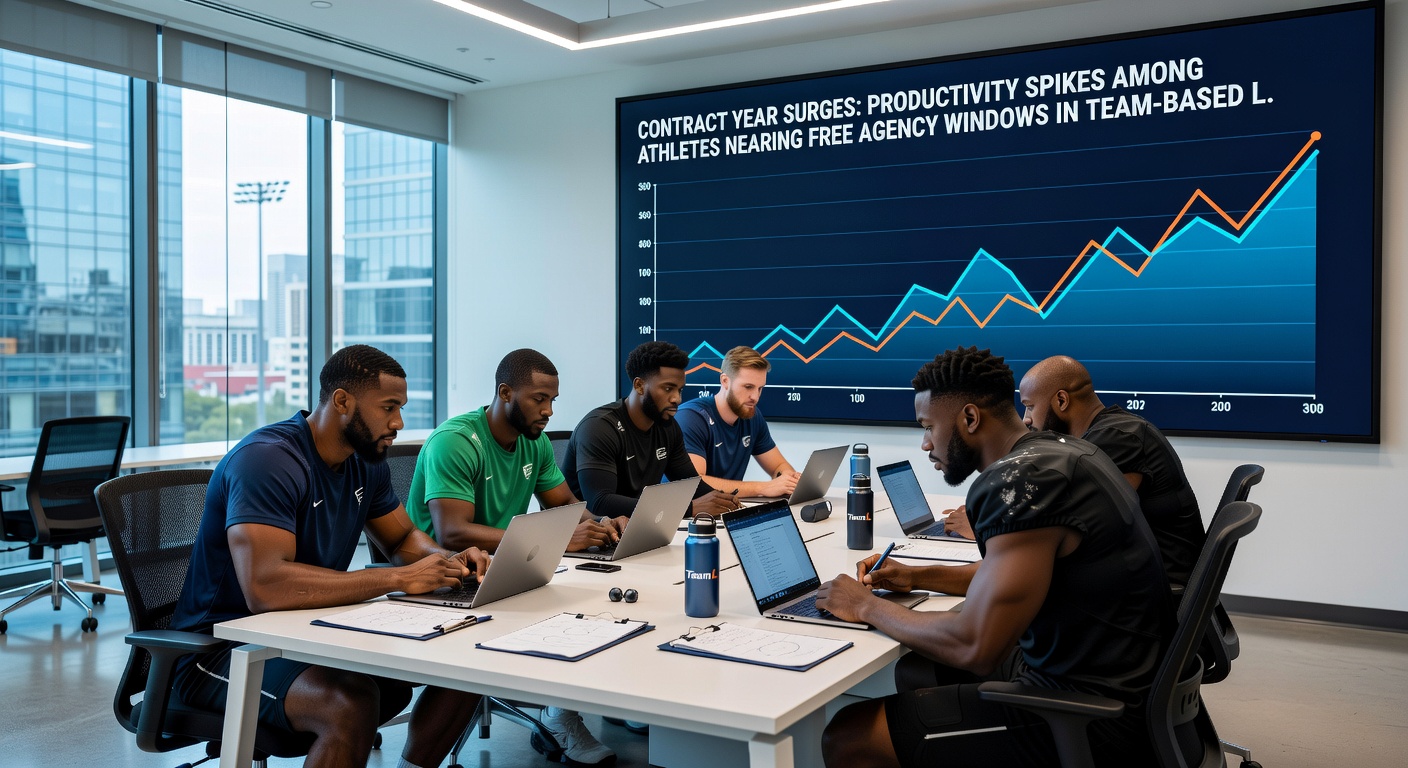
European soccer datasets show parallel movement, with strikers in top-five leagues averaging higher goal tallies in the final twelve months of deals. These figures come from aggregated match logs rather than isolated cases, and they persist after controlling for age, injury history, and role changes. The increases appear most pronounced among mid-tier performers seeking larger contracts rather than established superstars whose pay already reflects peak value.
Factors Driving the Observed Increases
Multiple elements combine to produce these surges. Players often receive additional coaching attention and scheme focus when teams know a departure looms, which leads to optimized usage. Physical conditioning programs intensify because athletes recognize that medical evaluations and combine-style testing occur during the same window. Agents also schedule performance-focused media appearances that reinforce accountability to current output.
Position-specific demands matter as well. Quarterbacks in the NFL show smaller statistical jumps than skill players because passing volume depends more on offensive line protection and play-calling, whereas defensive linemen post higher sack totals when unrestricted status approaches. In soccer, midfielders accumulate more progressive passes and tackles in contract years because their roles allow greater control over tempo and duels.League-Specific Patterns and Recent Data
NBA tracking through the 2025 season continued to show elevated usage rates for restricted free agents, while NFL advanced stats from the same period indicated higher snap counts for edge rushers nearing new deals. MLB front offices have adjusted scouting models to account for these temporary elevations, incorporating multi-year baselines rather than single-season spikes when projecting future value. Soccer transfer markets in summer 2025 reflected similar caution, with clubs discounting isolated goal tallies from players whose contracts expired that June.
Those adjustments appear in front-office reports and arbitration filings across leagues, demonstrating that decision-makers treat contract-year numbers as real but potentially inflated data points rather than permanent shifts.
Measurement Challenges and Controls
Researchers apply regression techniques and matched-pair analyses to separate contract incentives from other variables such as coaching changes, teammate quality, and schedule difficulty. Results indicate that the surge effect remains statistically significant even after these adjustments, though the magnitude varies by sport and position. Smaller samples in individual seasons can produce noise, which is why multi-year league-wide studies provide the clearest view.
Conclusion
Contract year productivity spikes constitute a documented feature of labor markets in team sports rather than anecdotal exceptions. Data aggregated across the NFL, NBA, MLB, and European soccer leagues shows consistent elevations in core metrics during the final season before free agency. Teams and analysts incorporate these patterns into valuation models by blending recent performance with historical baselines, which produces more accurate projections for roster construction and salary allocation.