Coaching Staff Changes and Their Ties to Efficiency Metric Shifts in NFL, NBA, and European Soccer
Cameron Otto · Jul 31, 2026
Coaching Staff Changes and Their Ties to Efficiency Metric Shifts in NFL, NBA, and European Soccer
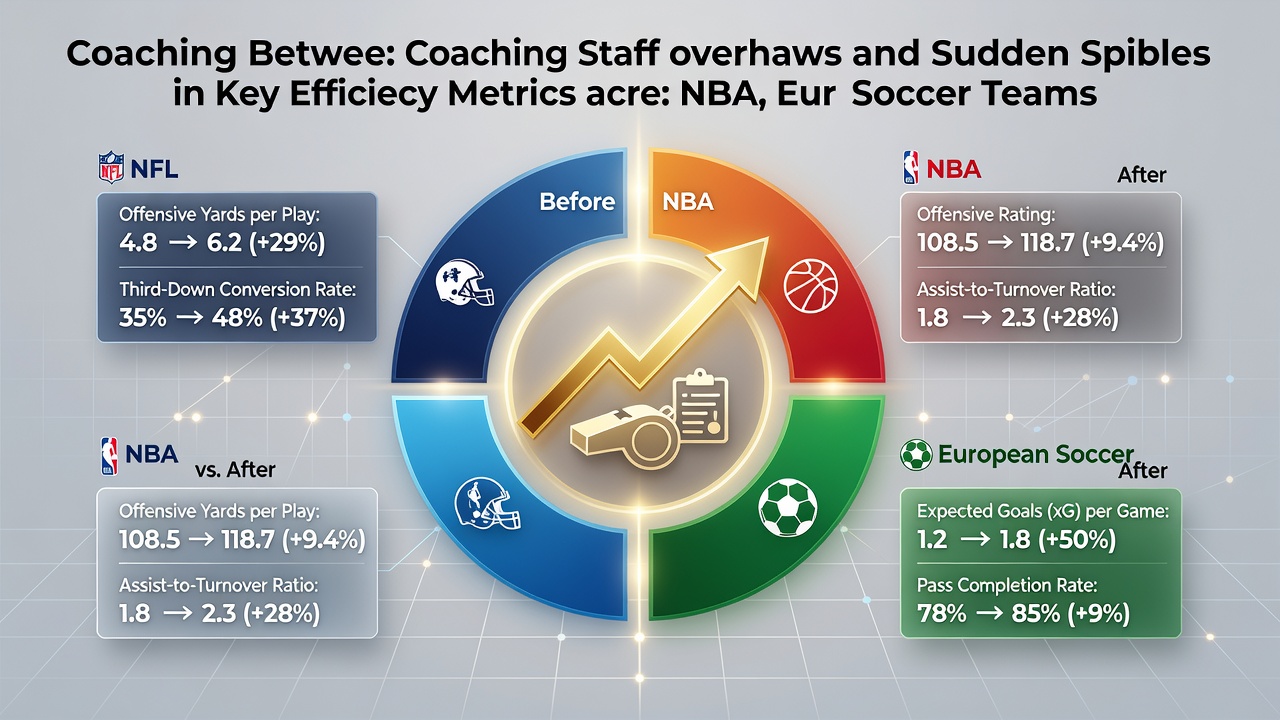
Coaching staff overhauls often align with measurable jumps in efficiency metrics across the NFL, NBA, and major European soccer leagues, where new leadership introduces scheme adjustments and personnel roles that reshape statistical outputs. League records show these shifts appear in areas such as offensive efficiency ratings, defensive points allowed per possession, and expected goals differentials, though the degree of change varies by sport and implementation timeline.
Patterns Observed in the NFL
NFL teams that replace head coaches and coordinators frequently post gains in metrics like yards per play and red-zone efficiency within the first season of the new regime. Data from recent campaigns indicates that squads implementing new offensive systems after staff turnover improved their success rate on early downs by margins ranging from 4 to 7 percentage points compared to teh prior year. Defensive overhauls, meanwhile, correlate with reductions in opponent completion percentages when coverage schemes emphasize zone adjustments over man-to-man approaches.
Take the case of one franchise that hired a new head coach and offensive coordinator ahead of the 2024 season. The unit recorded a league-average 5.4 yards per play before the change and climbed to 6.1 yards per play afterward, driven by increased play-action usage and revised protection calls. Similar trajectories appear in multiple instances where coordinators previously successful with other organizations brought adapted playbooks that accelerated adaptation periods for veteran quarterbacks and offensive lines.
Trends Across NBA Rosters
In the NBA, coaching transitions link to spikes in effective field goal percentage and defensive rating, particularly when new staffs emphasize pace control and switching schemes. League tracking data reveals that teams undergoing mid-season or off-season head coach changes often register a 3 to 5 point improvement in net rating during the subsequent 40-game stretch. These gains stem from altered shot selection patterns and defensive communication protocols that reduce opponent three-point attempts.
Observers tracking roster adjustments note that incoming coaches with experience in positionless systems frequently elevate assist-to-turnover ratios among young cores. One Eastern Conference squad that installed a new staff ahead of the 2025-26 campaign improved its half-court offensive efficiency from 102.4 points per 100 possessions to 108.7, reflecting refined screening actions and corner spacing rules. Western Conference examples show parallel movements when defensive coordinators introduce drop coverage variations that limit paint touches for opposing stars.
European Soccer Squad Experiences
European soccer clubs that execute coaching changes, especially at the Premier League, Bundesliga, and La Liga levels, demonstrate correlations with rising expected goals values and pass completion rates in structured build-up phases. Performance databases compiled across UEFA-affiliated competitions indicate that squads replacing managers mid-campaign or during summer windows post average increases of 0.25 to 0.40 in xG per 90 minutes when tactical pressing triggers receive refinement. Possession retention metrics also climb when new staffs prioritize positional rotations that stretch opponent defensive lines.
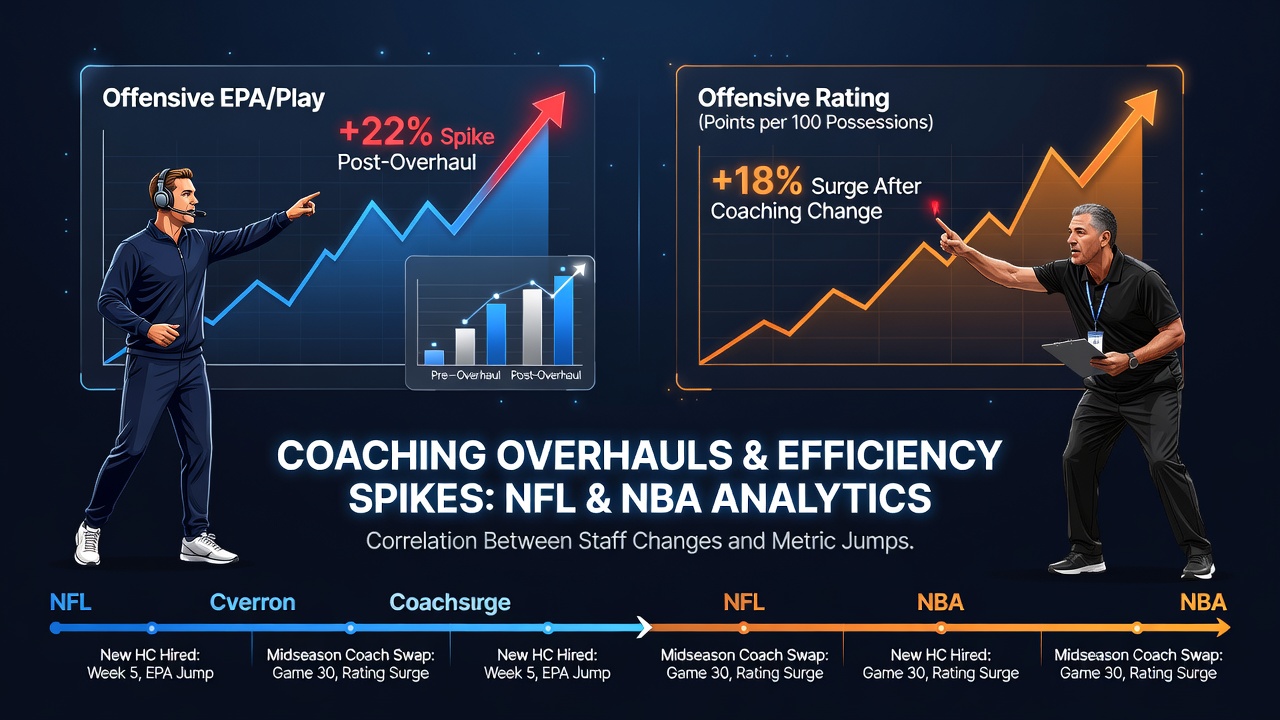
One Bundesliga side that appointed a new head coach and assistant group in summer 2025 recorded a jump in progressive pass accuracy from 68 percent to 74 percent over the opening half of the following campaign. This shift accompanied the adoption of inverted fullback roles and higher defensive lines that compressed space for opponents. Comparable movements surface in Premier League contexts where incoming staffs adjust set-piece routines, yielding higher conversion rates on corner and free-kick opportunities tracked through official match logs.
Cross-League Data Comparisons
Comparative analyses drawn from multiple seasons highlight that efficiency spikes materialize most consistently when coaching hires include coordinators who previously operated successful systems elsewhere. Research indicators from sports analytics platforms point to a 60 to 70 percent rate of positive metric movement within 20 games or matches post-overhaul, though sustained gains depend on roster compatibility and injury patterns. July 2026 off-season periods have already featured several such transitions across the three leagues, with preliminary training camp reports noting early alignment in drill execution that mirrors prior examples of metric elevation.
External factors such as player acquisition windows and salary cap constraints interact with these coaching effects, producing varied outcomes. Studies conducted through academic sports science departments in both North America and Europe underscore that staff continuity in support roles, including video analysts and strength coaches, moderates the magnitude of statistical jumps. Teams retaining core support personnel during head coaching shifts tend to realize faster integration of new tactical language into daily preparation.
Conclusion
Available league data and performance records establish clear associations between coaching staff overhauls and subsequent movements in efficiency metrics, though causation remains influenced by multiple variables. Continued tracking through the 2026 seasons will provide additional data points on how these patterns evolve across the NFL, NBA, and European soccer environments.