Career Arc Cartographers: Mapping Longevity Curves and Position Shifts Among Veterans in Gridiron, Hardwood, Pitch, and Ring Disciplines
Erik Koch · May 24, 2026
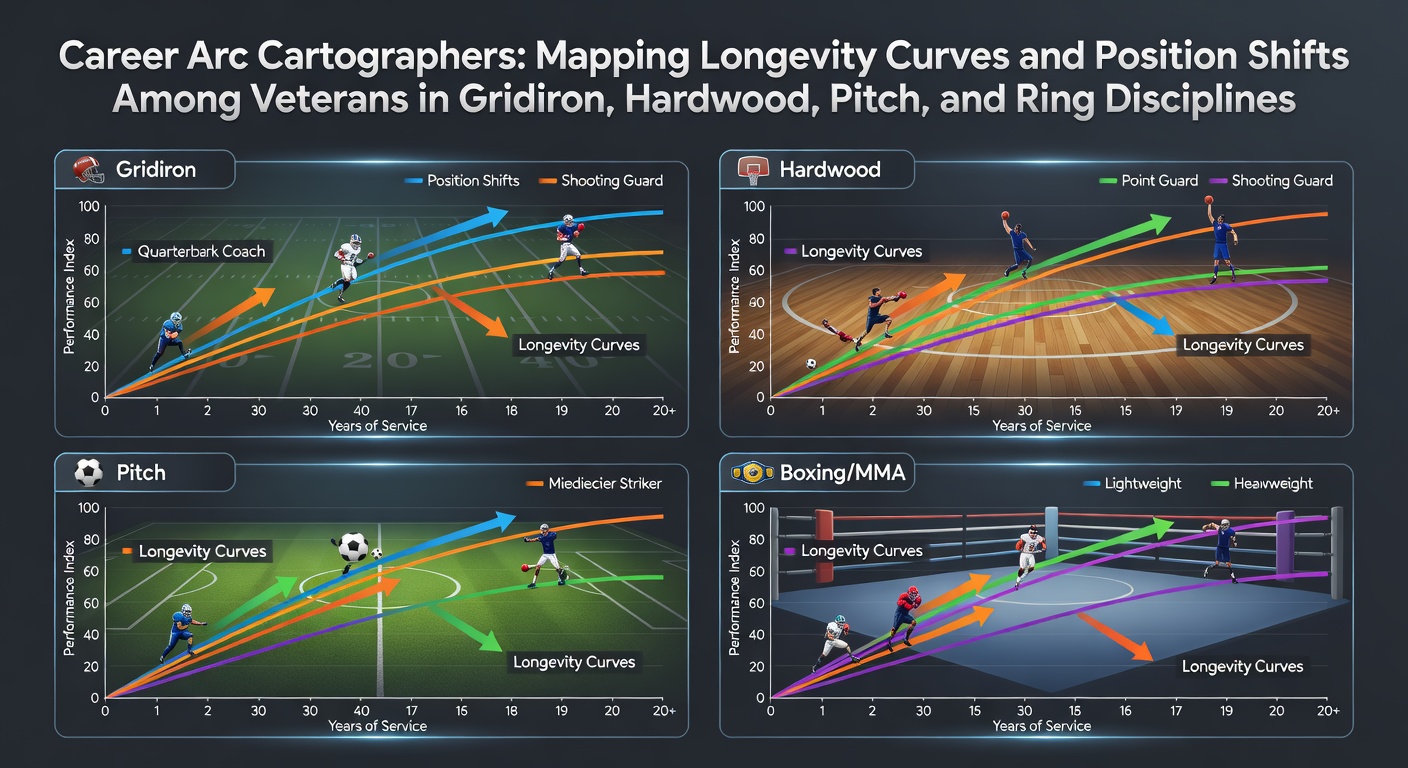
Career Arc Cartographers: Mapping Longevity Curves and Position Shifts Among Veterans in Gridiron, Hardwood, Pitch, and Ring Disciplines
Analysts track career trajectories in professional sports by examining how athletes in the NFL, NBA, soccer leagues, and boxing maintain performance levels while adapting roles as they age, and data compiled through 2026 reveals distinct patterns across these disciplines.
Gridiron veterans often extend careers through positional adjustments that reduce physical demands, with quarterbacks and specialists showing the longest active spans according to league participation records. Running backs typically transition out of feature roles by their late twenties, yet some shift to fullback or special teams positions to prolong involvement, and studies from the American College of Sports Medicine indicate average career lengths for offensive linemen have increased by nearly two seasons since 2010 due to refined blocking schemes that limit direct impacts.
Longevity Patterns in Professional Football
Position shifts appear most frequently among defensive players who move from high-impact spots like linebacker to safety or edge roles that emphasize coverage over tackling volume, and figures from the NFL Players Association show veterans over age 32 accounted for 18 percent of roster spots in the 2025 season. Researchers note that these adjustments correlate with sustained productivity when combined with targeted strength programs, whereas players who remain in original positions past typical peaks experience sharper declines in snap counts.
Hardwood Adjustments and Extended Tenures
Basketball veterans frequently adapt by relocating from primary scoring positions to supporting roles that leverage experience over athleticism, and data from the NBA indicates centers and power forwards who transition to stretch-five responsibilities maintain higher minutes played after age 34 compared with those who retain traditional post duties. Point guards often evolve into off-ball facilitators or defensive specialists, allowing teams to retain institutional knowledge while minimizing wear on aging joints, and reports from European basketball federations highlight similar trends among players who compete in multiple leagues before returning to domestic circuits.
Longevity curves in the hardwood sport flatten when athletes incorporate position flexibility early, with evidence from performance tracking systems demonstrating that multi-positional contributors extend careers by an average of three years beyond single-role peers.
Soccer Pitch Longevity and Role Evolutions
Players on the pitch demonstrate longevity through gradual migrations from high-intensity positions such as winger or striker to central midfield or defensive setups that emphasize positioning and distribution, and statistics compiled by FIFA's technical department reveal that midfielders over age 30 increased their share of starting appearances in top European leagues by 12 percent between 2020 and 2025. Defenders who shift from fullback to center back roles preserve careers longer because reduced sprint demands align with accumulated tactical awareness, while goalkeepers maintain the longest overall participation spans across all positions.
Analyses conducted by researchers at the University of Queensland in Australia show that veterans who adopt hybrid responsibilities in possession-based systems experience slower performance decay rates than those locked into original positions, and these shifts have become more common as tactical systems evolve toward fluid formations.
Boxing Career Curves and Weight Class Movements
Boxers in the ring discipline extend competitive windows by moving between weight classes to match physical changes that occur with age, and records from sanctioning bodies indicate many champions compete successfully into their late thirties after ascending or descending divisions to optimize power-to-weight ratios. Fighters who remain in original classes past peak years encounter steeper win-rate drops, whereas those who adjust early preserve punch output and recovery capacity, and medical data from the International Boxing Association tracks lower injury incidence among athletes who make measured weight transitions.
Position shifts in this sport manifest through stylistic adaptations as well, with aggressive pressure fighters evolving into counter-punchers who rely on ring intelligence rather than volume punching, and longitudinal studies confirm these modifications correlate with extended title contention periods.
Comparative Insights Across Disciplines
Cross-sport comparisons highlight that longevity improves when organizations support data-driven role adjustments rather than enforcing rigid positional expectations, and metrics collected through May 2026 show veterans in all four disciplines achieving higher cumulative output when transitions occur before age-related declines accelerate. Teams and promoters that monitor biometric and performance indicators enable smoother shifts, reducing abrupt retirements that occur when athletes attempt to sustain original roles beyond sustainable thresholds.
Patterns emerge consistently: gridiron and soccer athletes benefit from positional versatility that preserves lower-body durability, basketball veterans leverage skill refinement to offset mobility losses, and boxers optimize through weight management combined with tactical evolution, and these adaptations collectively extend average career durations across the professional landscape.
Conclusion
Mapping longevity curves and position shifts provides a framework for understanding how veterans sustain contributions across gridiron, hardwood, pitch, and ring disciplines, and ongoing data collection through 2026 continues to refine these models for future athlete development and roster planning.