Biometric Monitoring Tools and Their Role in Predicting Breakout Seasons Among Professional Athletes
Mara Richter · Aug 23, 2026
Biometric Monitoring Tools and Their Role in Predicting Breakout Seasons Among Professional Athletes
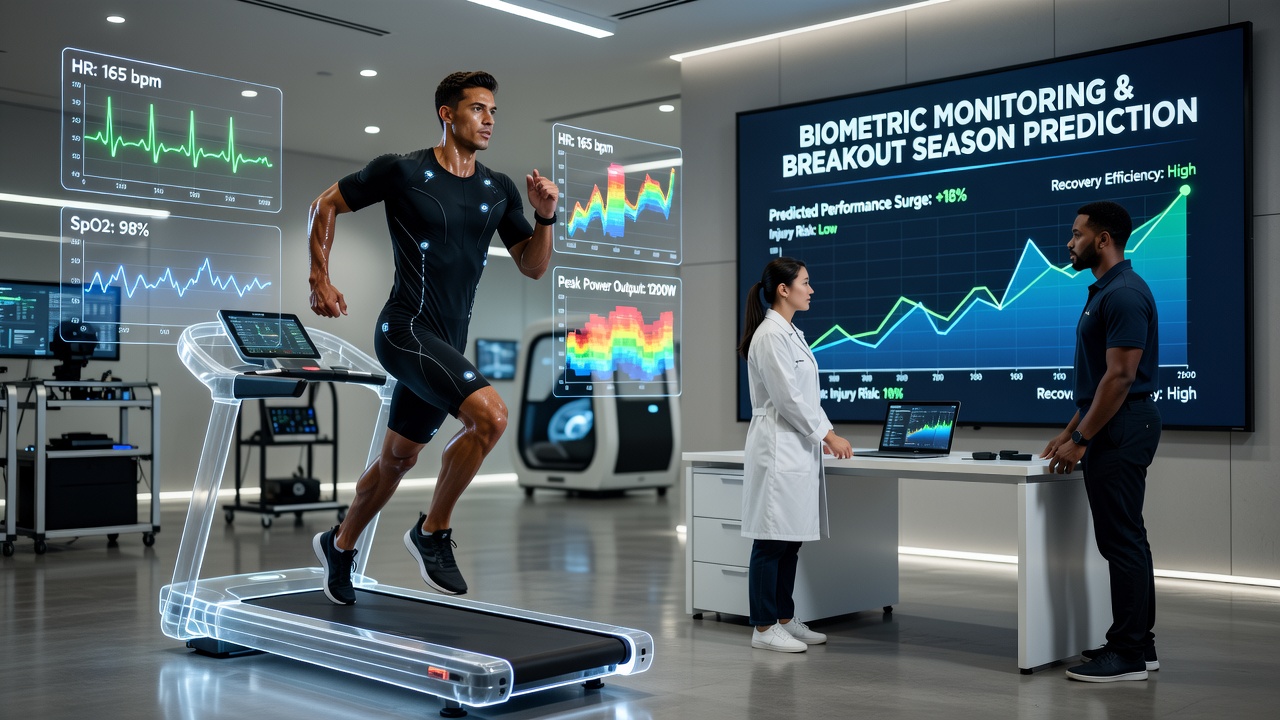
Biometric monitoring tools have become standard equipment across major professional leagues, where devices track heart rate variability, sleep patterns, movement loads, and recovery markers in real time, and these streams help organizations identify athletes whose physiological data signals upcoming performance jumps. Teams collect continuous readings from wearables and integrate them with historical performance logs, which allows analysts to spot deviations from baseline that often precede increased output in scoring, endurance, or defensive metrics. Data from the 2024 and 2025 seasons shows measurable correlations between elevated readiness scores and subsequent statistical gains in multiple sports, yet the connections remain probabilistic rather than guaranteed.
Core Technologies and Data Collection Methods
Modern biometric systems combine chest straps, armbands, and smart textiles that record dozens of variables per second, while GPS units and accelerometers add spatial and force data that together create comprehensive athlete profiles. Organizations such as the National Athletic Trainers' Association publish guidelines on sensor placement and calibration to maintain consistency across training and competition environments. Researchers at institutions in Canada and Australia have documented how nightly heart rate variability trends can forecast neuromuscular readiness days ahead, giving coaches windows to adjust workloads before fatigue sets in. These tools operate alongside traditional scouting reports, yet they add objective layers that reduce reliance on subjective observation alone.
Linking Physiological Signals to Performance Surges
Breakout seasons frequently follow periods when biometric dashboards show improved recovery ratios alongside controlled increases in high-intensity training loads, and analysts cross-reference these patterns against positional benchmarks to flag athletes poised for elevated production. In soccer, for instance, midfielders whose external load metrics rise steadily while internal load indicators like perceived exertion remain stable have recorded higher pass completion and distance covered in the following campaign. Similar patterns appear in basketball, where players whose sleep efficiency scores climb above seasonal averages often post improved shooting percentages and rebound rates once the regular schedule begins. Studies conducted through the European College of Sport Science have examined cohorts across multiple leagues and found that athletes whose heart rate recovery times shorten by more than 8 percent between training blocks demonstrate a higher likelihood of exceeding prior-year benchmarks in key categories.
League-Specific Applications and Case Patterns
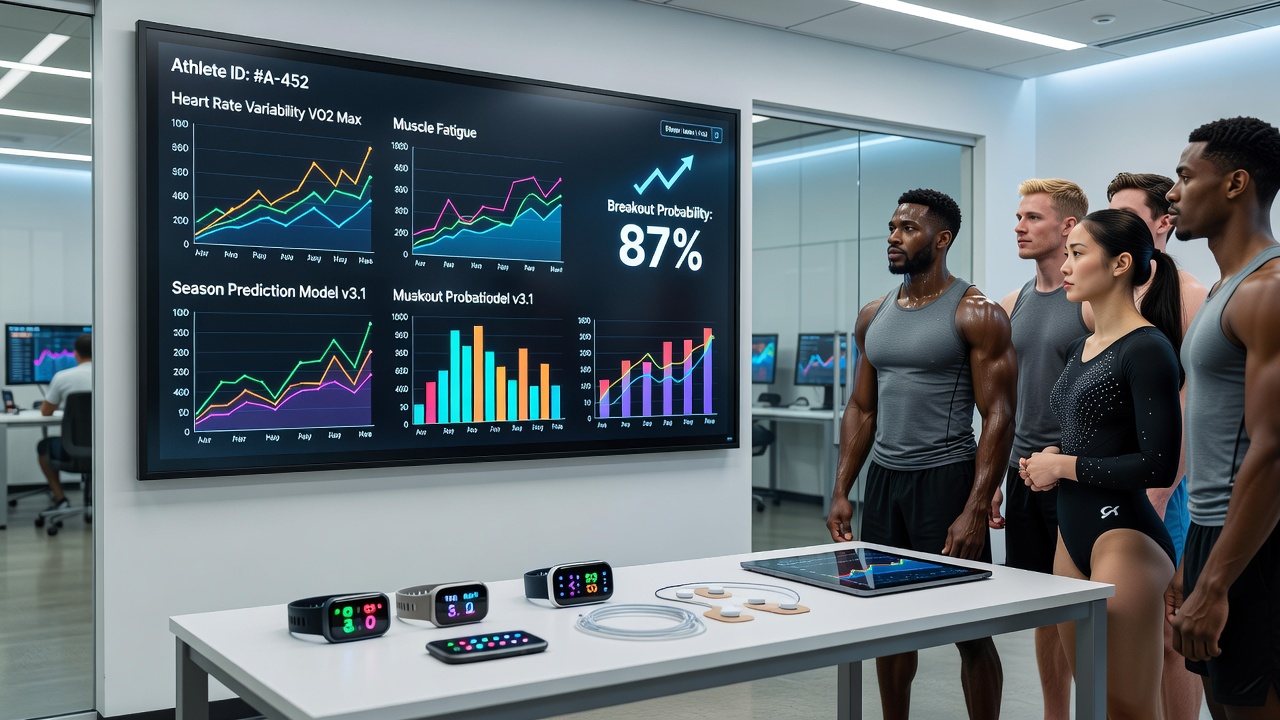
NFL clubs use biometric thresholds to manage practice intensity during August training camps, where elevated readiness scores in young linemen have preceded notable increases in snap counts and tackle production during the regular season. NBA teams monitor load management data to identify second-year players whose resting heart rates drop while explosive movement metrics climb, a combination that frequently aligns with expanded minutes and improved efficiency ratings. MLB organizations track pitcher arm stress alongside recovery markers, and data sets reveal that prospects whose biometric profiles stabilize after minor-league adjustments often record strikeout rate improvements upon reaching the majors. Observers note that these indicators work best when combined with video analysis and coaching input, because isolated biometric spikes do not always translate into sustained statistical gains without tactical fit.
Limitations and Integration Challenges
Biometric predictions carry inherent variability because external factors such as contract situations, coaching changes, and opponent strength influence outcomes even when physiological signals appear favorable. Accuracy rates vary by sport and position, with some research indicating stronger correlations in endurance-based roles than in skill-dominant positions where decision-making under pressure dominates. Teams therefore treat biometric outputs as one input among several rather than standalone forecasts, and they continue to refine algorithms as larger longitudinal data sets become available. Privacy protocols and player consent frameworks also shape how organizations deploy these tools, since collective bargaining agreements in several leagues now govern data access and usage.
Future Directions in Predictive Modeling
Advancements in machine learning allow organizations to layer biometric streams with historical game logs and environmental variables, which produces more nuanced probability models for individual breakout potential. As the 2026 campaign approaches, several clubs have expanded their analytics departments to incorporate real-time feedback loops that adjust training prescriptions based on daily biometric shifts. Continued collaboration between academic researchers and professional franchises is expected to yield refined thresholds that account for age, position, and injury history, thereby sharpening the tools' utility without replacing established evaluation methods.
Conclusion
Biometric monitoring provides teams with quantifiable indicators that complement traditional scouting and statistical analysis when assessing which athletes may deliver breakout seasons. The technology tracks recovery, load, and physiological adaptation across sports, yet its predictive value depends on integration with contextual factors and human expertise. Ongoing data collection and cross-disciplinary research continue to define the boundaries and possibilities of these systems in professional athletics.