Biomechanical Tracking Tools Reveal Positional Adaptability Patterns in Multi-League Athletes
Mara Richter · Aug 5, 2026
Biomechanical Tracking Tools Reveal Positional Adaptability Patterns in Multi-League Athletes
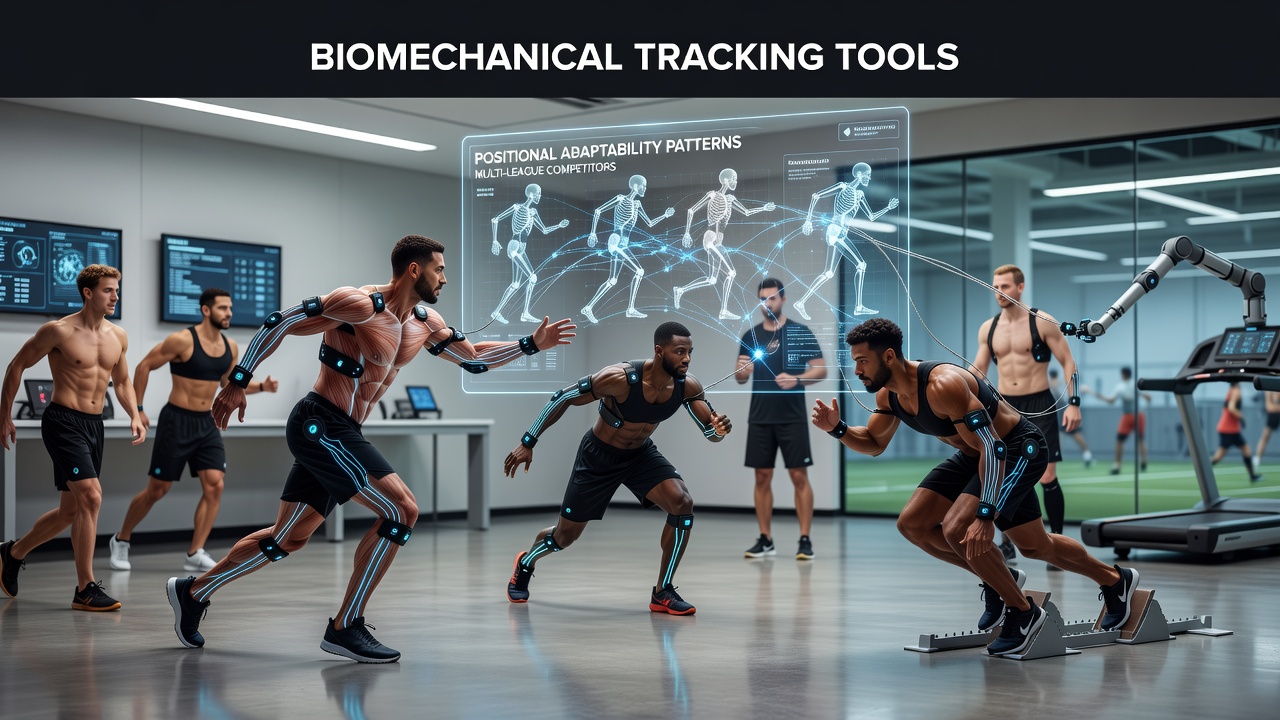
Biomechanical tracking tools have expanded across professional leagues since the mid-2010s, and data streams from these devices now connect directly to how athletes adjust their roles when moving between different sports and positions. Systems that combine inertial measurement units, force plates, and optical motion capture generate continuous readings on joint angles, ground reaction forces, and segmental velocities. Researchers at the Australian Institute of Sport have documented these metrics in athletes who compete in both rugby and Australian rules football, where positional switches require rapid recalibration of stride length and torso rotation.
Multi-league competitors face repeated demands to shift from fixed roles in one sport to fluid responsibilities in another. Tracking data collected through the 2025-2026 seasons shows that athletes who maintain consistent hip-knee coordination patterns across contexts demonstrate higher rates of successful positional transitions. In August 2026, several European soccer clubs began integrating the same sensor arrays previously used in NBA load-management protocols, allowing direct comparison of acceleration profiles between basketball guards and wing midfielders.
Core Components of Modern Tracking Systems
Current platforms rely on synchronized sensor networks rather than single-device measurements. Accelerometers embedded in garments record linear and angular accelerations at 1000 Hz sampling rates, while pressure-sensitive insoles capture plantar force distribution during directional changes. These inputs feed into algorithms that reconstruct three-dimensional body kinematics and estimate joint torques without requiring laboratory environments. The International Olympic Committee technical reports from 2024 detail how such systems now operate during live competition in multiple outdoor disciplines, providing position-specific benchmarks that teams compare across leagues.
Positional adaptability emerges when athletes modify movement signatures to match new tactical requirements. Data from MLB outfielders who later appear in NFL training camps illustrate this shift, as their throwing mechanics adapt from overhead arcs to lower release points suited for different field geometries. Observers note that athletes whose peak knee flexion angles remain within a narrow range across these tasks show reduced soft-tissue injury incidence during the first six months of role changes.
Cross-League Patterns in Adaptability Metrics
Studies examining athletes who compete in both soccer and basketball highlight consistent relationships between trunk lean variability and successful position switches. When players transition from central midfield to small forward roles, those who increase mediolateral center-of-mass displacement by 12-18 percent during defensive slides maintain higher on-ball efficiency ratings. Figures released by the Canadian Sport Institute Pacific in early 2026 quantify these adjustments across 47 athletes who moved between European and North American leagues within the same calendar year.
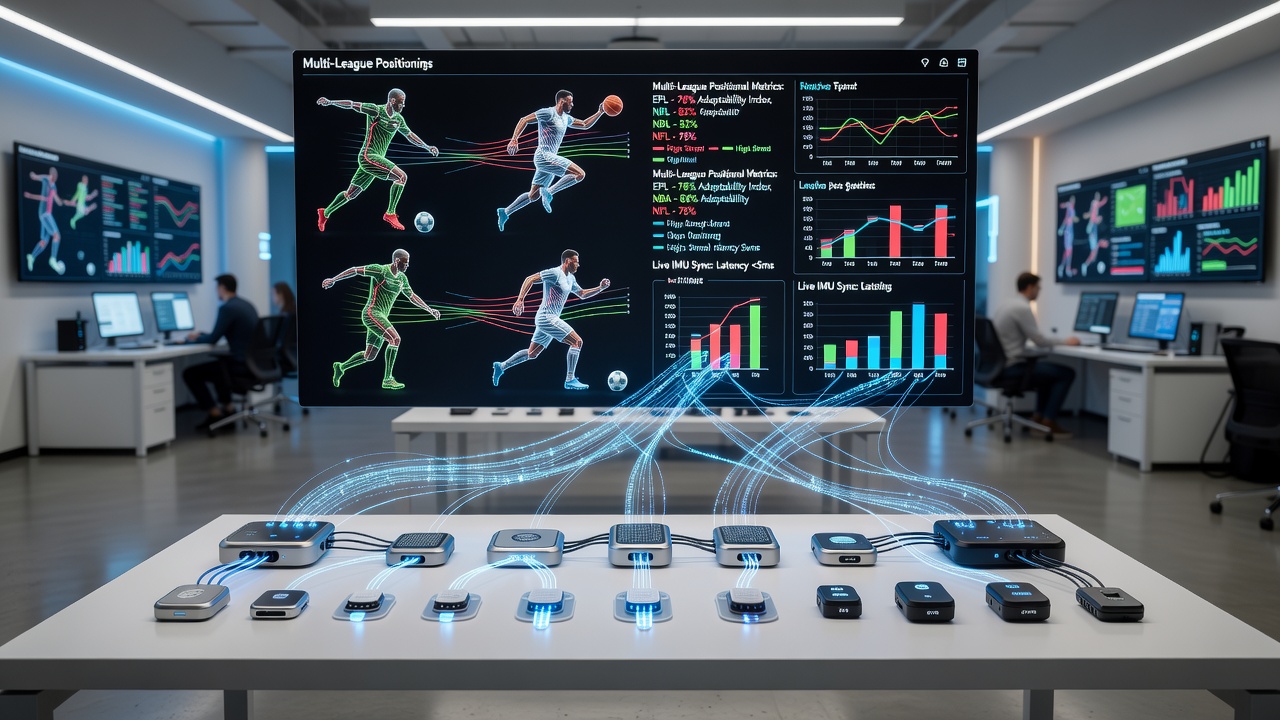
Force-plate derived metrics further separate athletes who adapt quickly from those who require extended adjustment periods. Vertical impulse symmetry during single-leg landings serves as one reliable predictor, with athletes showing less than 8 percent asymmetry completing positional changes in fewer than four weeks on average. In contrast, larger asymmetries correlate with extended timelines and altered workload prescriptions. These patterns hold across gridiron defensive backs moving into soccer fullback positions and vice versa.
Integration with League-Specific Workload Models
League schedules impose distinct recovery and loading cycles that interact with biomechanical profiles. Soccer calendars featuring midweek European fixtures produce different cumulative hip adduction moments compared with NBA back-to-back sequences. When athletes move between these environments, tracking tools allow staff to normalize external load against individual movement signatures rather than generic position averages. A 2025 analysis of 62 multi-league competitors demonstrated that those whose adduction moment variability stayed below 15 percent maintained consistent sprint outputs despite schedule density increases.
Optical tracking combined with wearable data also captures how athletes redistribute segmental power during position-specific actions. Baseball pitchers who later play quarterback roles, for instance, show measurable shifts in pelvis-trunk separation timing when throwing motion constraints change. Teams now use these timing offsets to design targeted drills that accelerate adaptation while preserving tissue tolerance.
Future Data Streams and Standardization Efforts
Efforts to align data formats across governing bodies continue into 2026. Harmonized metrics for peak knee extension velocity and ground contact time now appear in shared repositories maintained by academic consortia in Australia and Canada. These repositories enable direct statistical comparison of adaptability scores for athletes who have logged minutes in three or more professional leagues. The resulting datasets support predictive models that estimate time-to-competency for positional transitions based on baseline biomechanical signatures.
Conclusion
Biomechanical tracking tools supply objective measurements that map how athletes recalibrate movement patterns when occupying new positions across leagues. The accumulated records through August 2026 demonstrate repeatable relationships between joint coordination variability, force symmetry, and successful role transitions. Continued standardization of these data streams will further clarify the biomechanical prerequisites that support sustained performance during multi-league careers.