Biomechanical Surface Transitions and Statistical Shifts Among Multi-Sport Athletes
Mara Richter · Jun 26, 2026
Biomechanical Surface Transitions and Statistical Shifts Among Multi-Sport Athletes
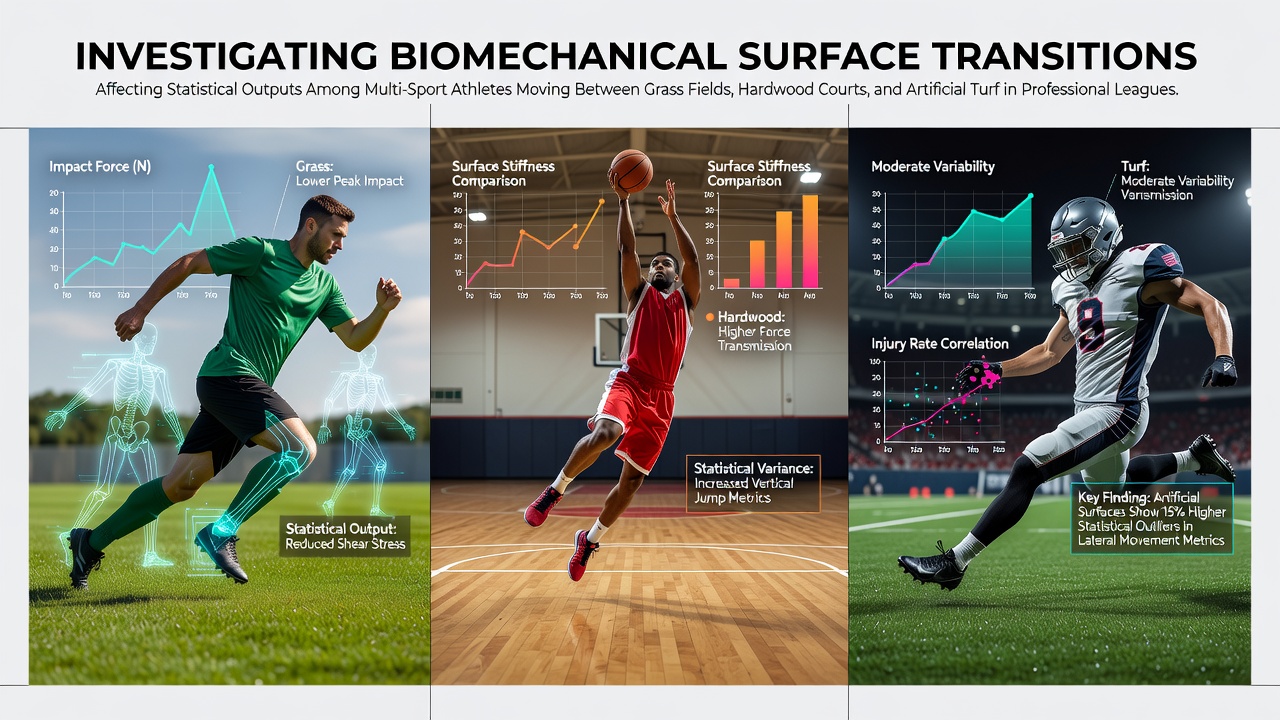
Professional athletes who compete across multiple sports encounter distinct biomechanical demands when moving between grass fields, hardwood courts, and artificial turf, and these transitions produce measurable changes in statistical outputs such as sprint times, acceleration rates, and injury-related absences. Data collected from leagues including the NFL, NBA, and various soccer competitions reveal consistent patterns tied to surface friction, energy return, and impact absorption.
Grass Fields and Initial Performance Baselines
Grass surfaces, common in soccer and American football, provide variable traction that depends on weather and maintenance, which influences how athletes generate force during cuts and accelerations. Studies tracking multi-sport participants show that players moving from grass to other surfaces often record slight declines in short-distance sprint metrics during the first weeks of adaptation, since the natural give underfoot alters stride mechanics compared with firmer alternatives. Researchers monitoring European soccer leagues and NFL training camps have documented these adjustments through wearable sensors, noting that ground reaction forces on grass typically range lower than on artificial alternatives during equivalent movements.
Hardwood Courts and Precision Movement Demands
Hardwood courts used in basketball require athletes to manage rapid lateral changes and vertical leaps on a surface with high friction but minimal cushioning, and this environment shapes different statistical profiles for those transitioning from outdoor fields. Multi-sport athletes who shift from grass or turf to hardwood frequently exhibit improved agility drill times after several sessions, because the consistent bounce and grip allow for sharper directional changes without the variable slip found on natural grass. League records from the NBA and overlapping international basketball events indicate that players with prior field sport experience maintain comparable rebound and steal rates once adapted, though initial sessions show elevated muscle activation in the lower legs due to the unyielding nature of the court.
Artificial Turf and Energy Return Effects
Artificial turf, now standard in many NFL stadiums and select soccer venues, delivers higher energy return than grass while presenting different shear forces that affect joint loading and stride efficiency. Athletes crossing from hardwood or grass onto turf often register faster top-end speed measurements in controlled tests, since the surface allows greater propulsion during linear sprints, yet data also point to increased torque at the knee and ankle during cutting maneuvers. Analyses conducted through 2025 and into early 2026 highlight how these properties influence game logs, with certain position groups showing higher snap participation rates when teams schedule more matches on turf compared with grass-heavy road trips.
Cross-Surface Data Patterns in Multi-Sport Athletes
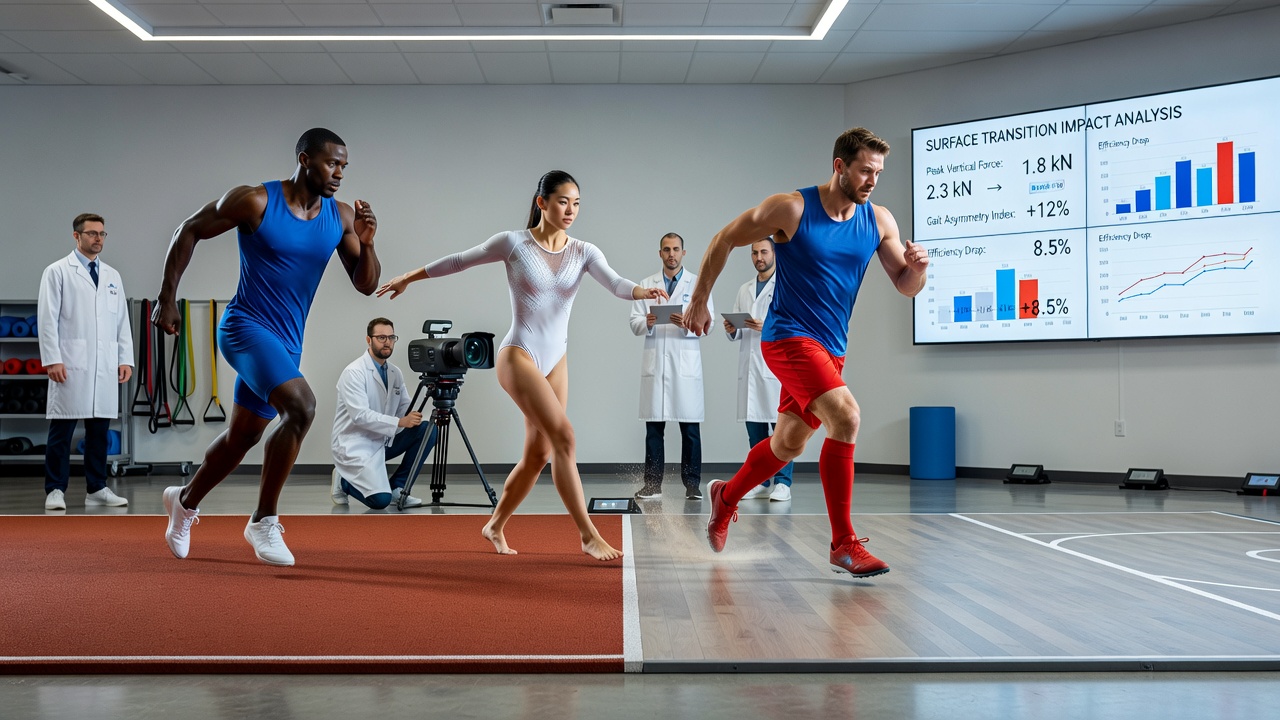
Longitudinal tracking of athletes who divide time between leagues reveals that surface transitions correlate with shifts in key output categories, including yards per carry in football, points per game in basketball, and distance covered per minute in soccer. According to findings published by the National Institutes of Health biomechanics division, players adapting between grass and turf demonstrate an average 3 to 5 percent variation in acceleration metrics during the initial four to six weeks. Observers note that those who rotate between hardwood and field surfaces maintain steadier shooting percentages once lower-body stiffness patterns stabilize, whereas incomplete adaptation periods coincide with temporary dips in defensive playmaking statistics.
Training logs from multi-league schedules in 2025 and 2026 further illustrate that athletes benefit from targeted surface-specific drills, which reduce the statistical variance observed during early transition phases. Research coordinated by the Australian Institute of Sport examined similar cohorts and reported that cumulative loading differences across surfaces contribute to altered workload distributions, particularly in athletes who log high minutes across both indoor and outdoor competitions. These adjustments appear in seasonal totals rather than single-game snapshots, as recovery timelines extend when athletes encounter rapid surface changes without preparatory conditioning blocks.
June 2026 Observations and Ongoing Monitoring
As of June 2026, performance databases from major professional organizations continue to incorporate surface-specific variables into player evaluation models, allowing teams to forecast statistical outputs more accurately for athletes with cross-sport histories. Recent compilations show that multi-sport participants who complete structured transition protocols maintain higher consistency in both speed and endurance markers across grass, hardwood, and turf environments. Equipment manufacturers have adjusted cleat and shoe designs accordingly, and league medical staffs track resulting changes in availability rates through shared data platforms.
Conclusion
Biomechanical differences between grass fields, hardwood courts, and artificial turf create distinct demands that alter statistical outputs for multi-sport athletes, with documented effects on speed, agility, and participation metrics across professional leagues. Continued data collection through mid-2026 provides clearer quantification of adaptation periods and supports refined training approaches that address surface transitions directly. These patterns remain central to understanding performance variability in athletes who navigate multiple playing environments throughout a single season or career.