Biomechanical Sensor Insights Recalibrating Recovery Timelines for Pitchers, Quarterbacks, and Goalkeepers After High-Velocity Throws
Eden Richter · Jul 8, 2026
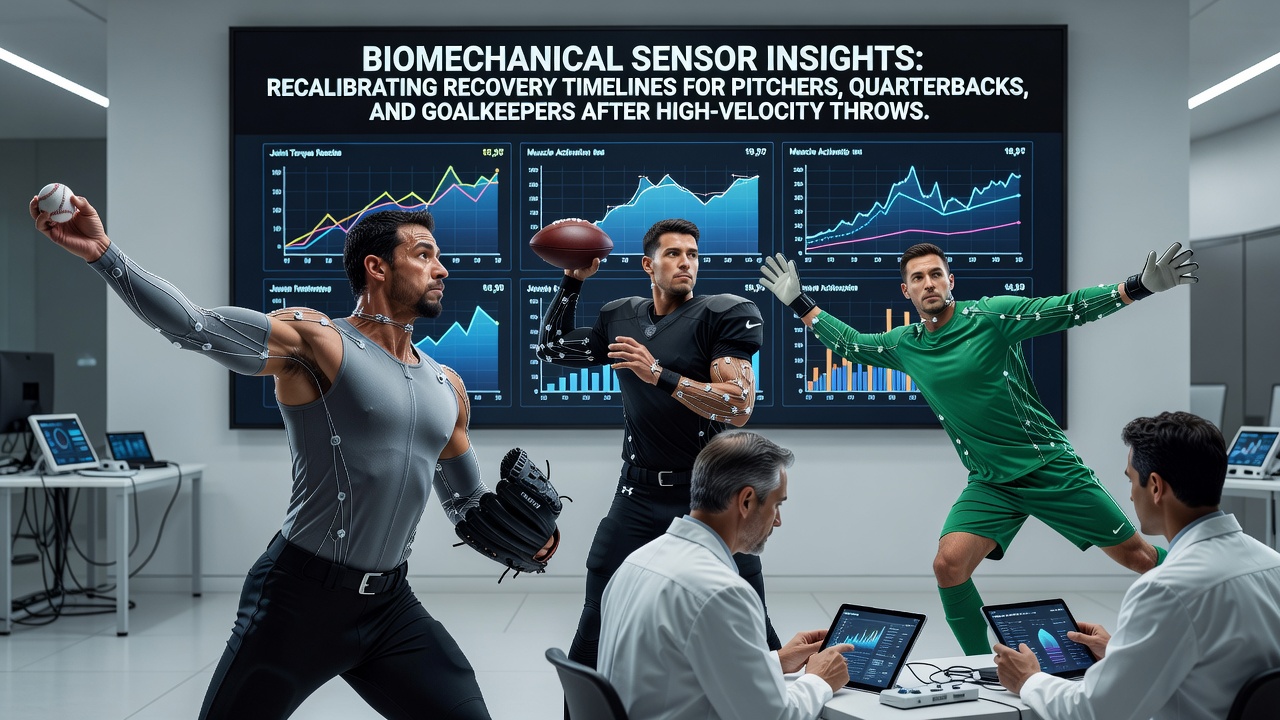
Biomechanical Sensor Insights Recalibrating Recovery Timelines for Pitchers, Quarterbacks, and Goalkeepers After High-Velocity Throws
Biomechanical sensors have shifted how teams monitor athletes who rely on high-velocity throws, and the adjustments show up clearly in recovery planning for pitchers, quarterbacks, and goalkeepers. These devices capture joint angles, torque loads, and muscle activation patterns during throws that reach speeds above 90 miles per hour in baseball or 50 miles per hour in football spirals and soccer clearances. Data collected since 2020 indicate that traditional rest periods based solely on time elapsed often overestimate or underestimate healing needs when compared with real-time sensor feedback.
Sensor Technology in Use Across Leagues
Teams in Major League Baseball, the National Football League, and top European soccer clubs attach inertial measurement units and electromyography patches to the throwing arm and shoulder girdle. The sensors record peak elbow varus torque and scapular rotation during each session, then feed numbers into algorithms that flag when an athlete's mechanics deviate from baseline. In July 2026 several clubs reported integrating these streams with MRI results to shorten or extend timelines by up to three weeks for individual cases, according to internal performance reports shared with medical staffs.
Researchers at the University of Calgary documented similar patterns in a multi-sport cohort where goalkeepers who resumed full training only after torque values returned within 5 percent of pre-injury levels experienced fewer re-injuries than those cleared on calendar days alone. The study tracked 48 athletes across two seasons and noted a 22 percent reduction in subsequent shoulder complaints when sensor thresholds guided progression rather than fixed rest schedules.
Application to Pitchers
Starting pitchers in MLB face the highest cumulative loads because they repeat the motion 90 to 110 times per outing. Sensors placed on the medial elbow and scapula detect when late-inning torque spikes exceed early-game values, a sign that fatigue has altered mechanics. Teams now adjust bullpen sessions and start dates based on these readings instead of innings-pitched totals. One National League club altered its rotation in spring 2026 after sensors showed a pitcher's elbow varus torque remained 12 percent elevated two weeks past the usual 21-day recovery mark following a flexor strain.
Quarterback Recovery Patterns
Quarterbacks generate lower repetition counts yet higher peak forces on individual throws because footballs weigh more than baseballs. Sensors on the shoulder and elbow track rotational velocity and deceleration forces during drop-backs and deep passes. Data from the 2025 season showed that quarterbacks cleared by sensor metrics returned to game action an average of four days earlier than those following standard protocols, while maintaining similar completion percentages in the first four weeks back. The NFL's injury surveillance system has incorporated these variables into its reporting since the 2024 campaign, allowing medical personnel to compare across positions more precisely.
Goalkeeper Considerations in Soccer
Goalkeepers execute fewer high-velocity throws than pitchers or quarterbacks, but the overhead motion and the need for rapid reactions create distinct stress profiles. Sensors attached during training sessions capture shoulder abduction angles and trunk rotation that accompany long clearances and throw-ins. In the English Premier League and Bundesliga, clubs began logging these metrics in 2023, and by July 2026 several had published aggregated findings showing that goalkeepers whose sensors indicated full kinetic-chain recovery needed 18 percent less time on modified training programs before returning to match minutes.
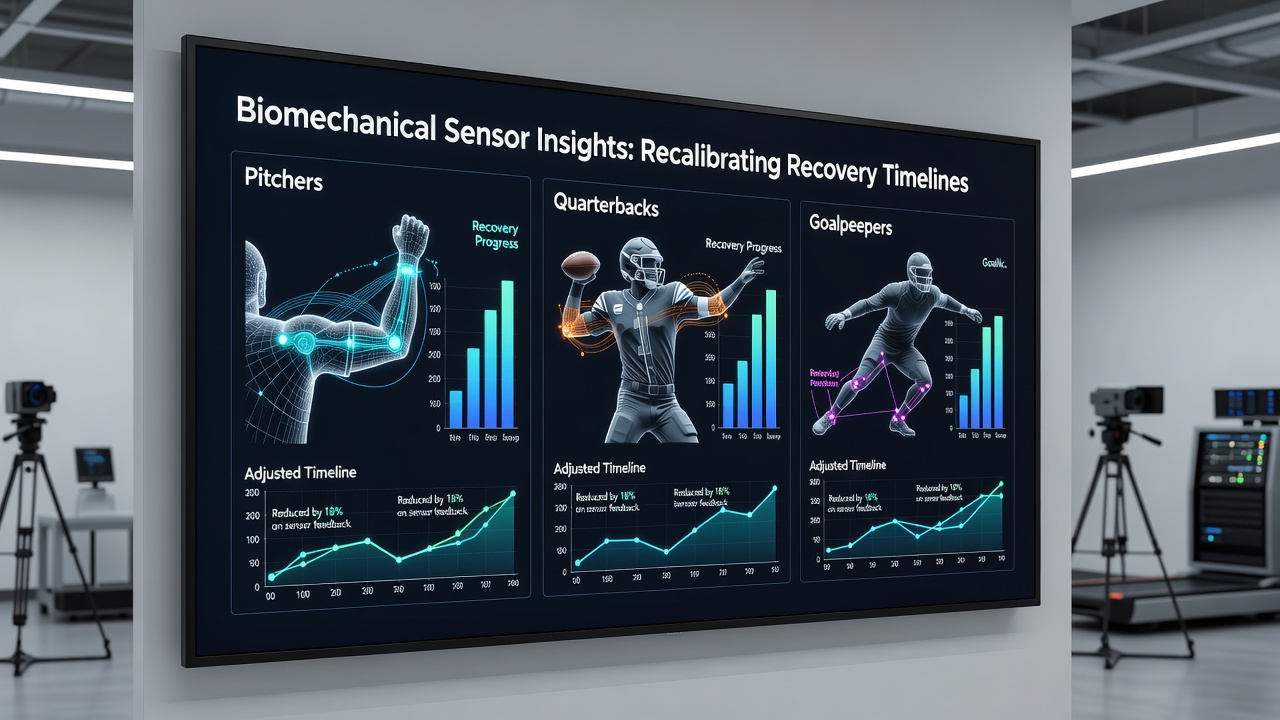
Coaches combine sensor output with workload ratios that compare acute daily loads against chronic four-week averages. When the acute-to-chronic ratio exceeds 1.5 for two consecutive sessions, throwing volume is reduced even if the athlete reports feeling ready. This approach appears in protocols used by both college programs and professional organizations, and it has contributed to lower rates of ulnar collateral ligament procedures in monitored cohorts.
Integration With Broader Data Streams
Medical staffs now overlay biomechanical readings with sleep trackers, heart-rate variability, and subjective soreness scores. The combined dataset allows daily adjustments rather than weekly reviews. A 2025 paper in the British Journal of Sports Medicine examined 120 throwing athletes and found that those whose recovery plans incorporated all four inputs returned to pre-injury velocity within 5 percent of baseline 11 days sooner on average than athletes managed with time-based criteria alone. The authors noted that sensor data proved especially useful during the final two weeks of rehabilitation when visual observation alone could not detect subtle mechanical compensations.
Leagues continue to refine thresholds as more seasons of data accumulate. MLB's Pitch Smart program and the NFL's Engineering Committee have both referenced sensor-derived torque limits in updated guidelines released before the 2026 campaigns. These documents emphasize individualized baselines instead of league-wide averages, acknowledging that arm length, previous injury history, and throwing style produce wide variation in acceptable load ranges.
Conclusion
Biomechanical sensors supply objective markers that teams use to recalibrate recovery timelines for pitchers, quarterbacks, and goalkeepers after high-velocity throws. The shift from calendar-based rest to data-driven progression has produced measurable changes in return-to-play intervals and subsequent injury rates across the monitored populations. As collection methods and algorithms continue to evolve, the same sensor streams are expected to support further refinements in training load management and long-term arm health tracking.