Age curves in motion: how prime performance windows vary across combat, team, and racket sports when tracking career statistical peaks
Eden Richter · Aug 19, 2026
Age curves in motion: how prime performance windows vary across combat, team, and racket sports when tracking career statistical peaks
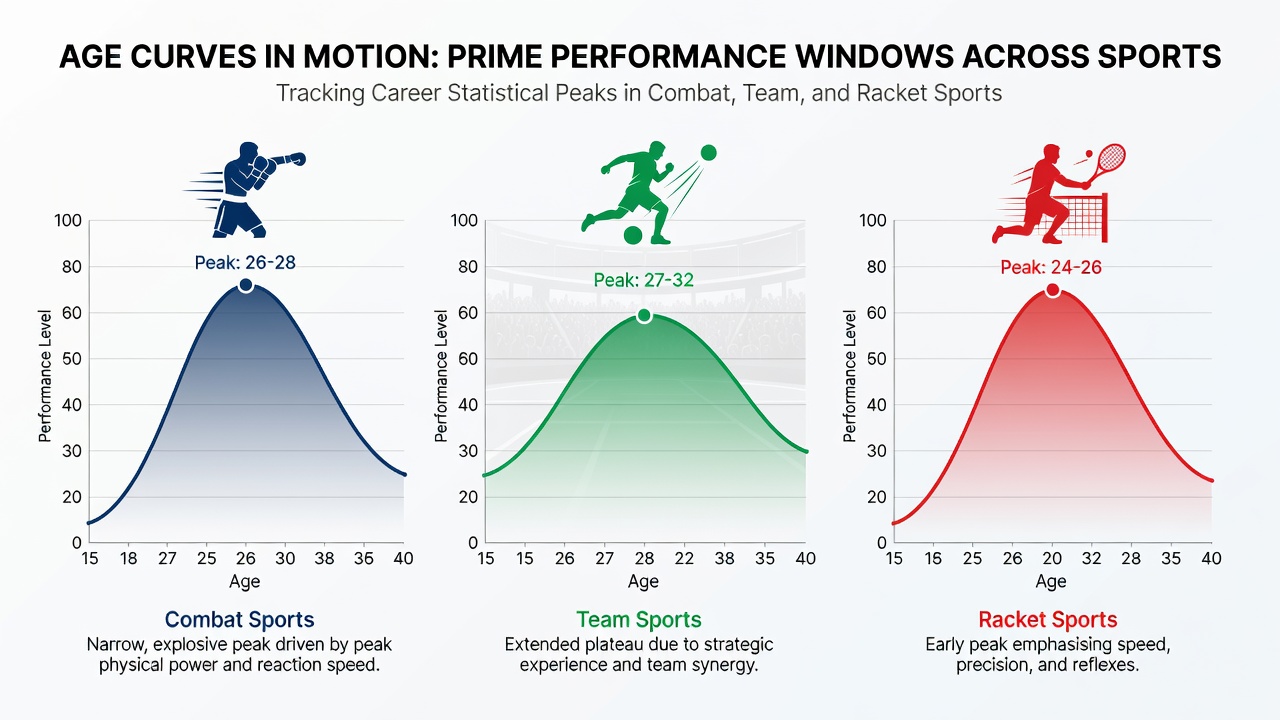
Researchers have tracked career statistical peaks across combat, team, and racket sports for decades, and the data reveals distinct prime performance windows that shift based on the physical and cognitive demands of each discipline. Studies from institutions like the University of Michigan's sports science program show how athletes in different categories reach their highest output levels at varying ages, with combat sports often favoring later peaks while racket sports cluster earlier. Those who analyze longitudinal stats note that these patterns hold steady even as training methods evolve, and figures from major leagues continue to illustrate the same trends into 2026.
Combat sports and delayed statistical peaks
Boxers and mixed martial artists frequently hit their statistical highs in the late twenties to early thirties because the combination of power, endurance, and tactical decision-making matures over time. Data from fight outcome databases indicates that knockout rates and significant strike accuracy climb steadily until age 29 on average, while defensive metrics like takedown avoidance remain stable longer than in faster-paced disciplines. Observers note that one welterweight who extended his title reign into his mid-thirties accumulated more significant strikes per minute after turning 30 than during his earlier championship run, and similar patterns appear when tracking career averages for punch volume across weight classes. But here's the thing: recovery capacity starts to decline after 32 in most datasets, which compresses the window for sustained elite output even as experience peaks.
Team sports and position-specific age curves
Team environments produce more varied prime windows because positions dictate different physical loads, with data showing that soccer midfielders often sustain high pass completion and distance covered metrics into their early thirties while strikers see goal-scoring peaks cluster between 24 and 27. NBA tracking reveals that perimeter players maintain three-point accuracy and assist rates longer than big men whose rebounding and block numbers drop after 28, and NFL studies confirm that wide receivers reach receiving yardage peaks around 26 whereas quarterbacks extend their efficiency numbers into the early thirties. A case where experts examined European soccer leagues found that central defenders recorded their highest tackle success rates at age 29 on average, and similar position splits appear in MLB where starting pitchers log their lowest ERA figures between 27 and 30. Those who've compiled multi-year datasets emphasize that team dynamics allow veterans to shift roles and maintain statistical relevance longer than individual combat athletes can manage.
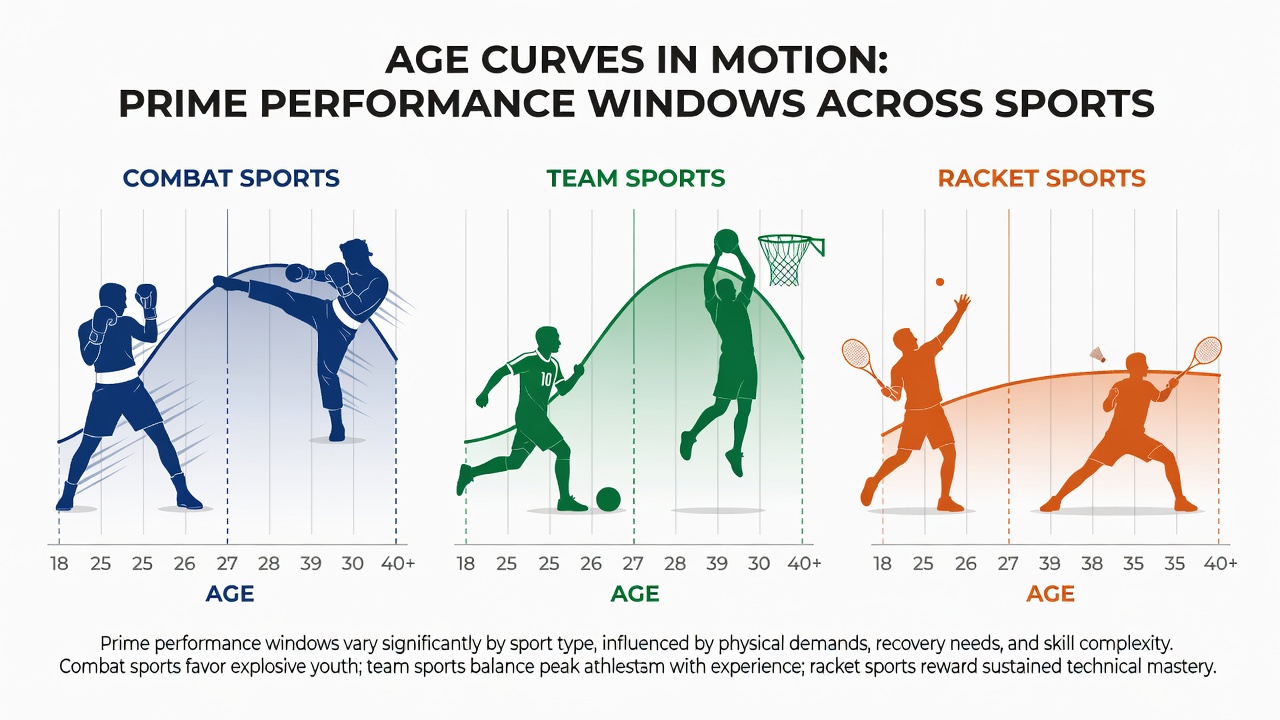
What's interesting is how schedule density affects these curves, because congested calendars in leagues like the Premier League and NBA accelerate physical wear and shift peaks slightly earlier for certain positions. Research indicates that athletes who manage load through rotation maintain output closer to their theoretical peaks, and figures from the 2025-2026 seasons continue to align with earlier longitudinal findings.
Racket sports and earlier statistical maxima
Tennis players reach their highest win percentages and ranking points between 23 and 27 according to ATP and WTA historical records, with serve percentages and return game stats peaking in that same range before gradual declines set in. The fast-twitch demands of racket sports compress the prime window compared to combat or team categories, and data shows that players who extend careers past 30 often transition to doubles or rely on experience to offset declining movement metrics. One study of Grand Slam performance tracked first-serve win rates and found the steepest drop after age 28, while baseline rally winners remain steadier but still trend downward. Observers note that badminton and table tennis follow comparable patterns, with elite players logging peak tournament wins in the mid-twenties before younger competitors overtake them in speed-based rallies.
Cross-category comparisons and longevity factors
When researchers align datasets across sports, the contrast becomes clear: combat athletes sustain output longer because accumulated ring intelligence offsets physical decline, team sport veterans adapt through role changes, and racket specialists face steeper drop-offs once reaction times slow. A 2024 analysis from an Australian sports institute linked these differences to training age and injury history, showing that athletes entering professional ranks later often compress their prime windows while early starters spread statistical peaks across more seasons. Figures from Olympic combat events and major racket tournaments in August 2026 continue to reflect the same age distributions observed in prior decades, and external factors like improved medical protocols have only modestly extended teh upper end of these curves. Those who study performance longevity point out that nutrition and recovery protocols now allow select athletes to remain competitive into their mid-thirties across all three categories, though the core statistical peaks remain anchored to the demands of each sport.
Conclusion
The patterns documented across combat, team, and racket sports demonstrate that prime performance windows are not uniform but instead tied to the specific physical, tactical, and recovery requirements of each discipline. Statistical tracking continues to confirm these variations year after year, and the data provides clear benchmarks for understanding when athletes across categories reach their career highs. As training and medical support advance, these established curves offer a foundation for predicting and extending output without altering the fundamental age-related timelines.